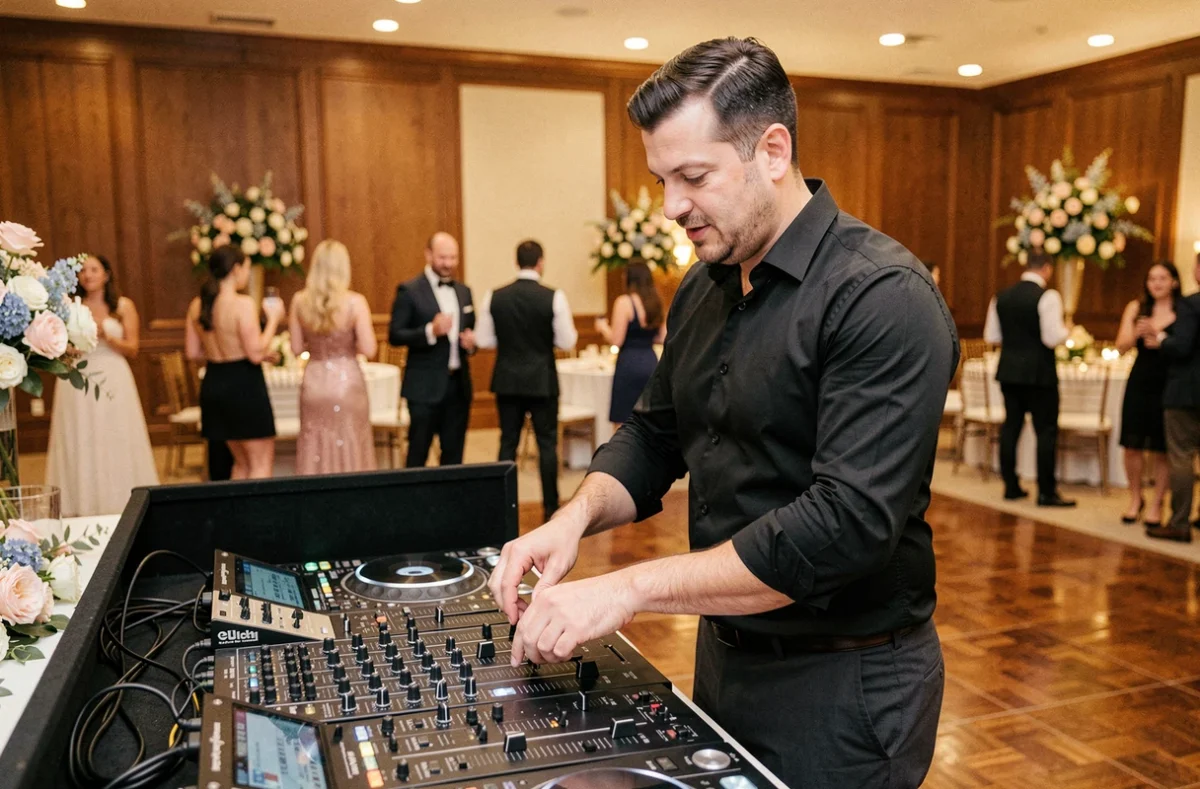
Choosing a wedding sound system means solving an equation with several variables: the size of the venue, the number of guests, the type of floors and walls, and whether or not there is a volume limiter. The speakers’ raw power is just one factor. This article compares the most common setups to identify which ones really deliver on the dance floor.
Venue limiters and noise regulations: what equipment alone can’t solve
Before comparing speakers, check a constraint that’s rarely mentioned in buying guides. Some reception venues have a limiter that reduces or cuts the audio signal as soon as it exceeds a set threshold. That threshold may be well below the capacity of the rented equipment.
French regulations set a limit of 102 dB(A) and 118 dB(C) averaged over 15 minutes for venues playing amplified sound. Staying within this limit does not protect you from complaints about neighborhood noise, which are covered by separate rules. A party can therefore comply with the permitted decibel levels and still face legal issues if neighbors file a complaint.
To prepare for this, ask the venue manager where the limiter’s sensor is located, which frequencies it monitors (bass is often the first to be targeted), and whether you can run a sound check before the big day. This advance check has a much greater impact on your equipment choice than reading a spec sheet.
A comprehensive guide to choosing a sound system for a wedding also covers the acoustic considerations specific to French reception venues.
Wedding sound systems: comparison by setup and guest count
The table below compares three common setups across the most typical guest-count ranges. The power ratings shown are RMS values (actual continuous power), not peak values, which manufacturers often inflate.
| Setup | Up to 80 guests | 80 to 150 guests | More than 150 guests |
|---|---|---|---|
| 2 active 10–12-inch speakers (no subwoofer) | Sufficient for the ceremony, drinks reception, and background music | Lacks bass on the dance floor | Insufficient coverage, with dead zones |
| 2 active speakers + 1 subwoofer | Plenty of headroom and good bass response | Best-suited setup, balancing power and size | Acceptable if the room isn’t too deep |
| 2 active speakers + 2 subwoofers + fill speakers | Oversized, with a risk of feedback | Worth considering if the room is L-shaped or highly reverberant | Necessary for even coverage |
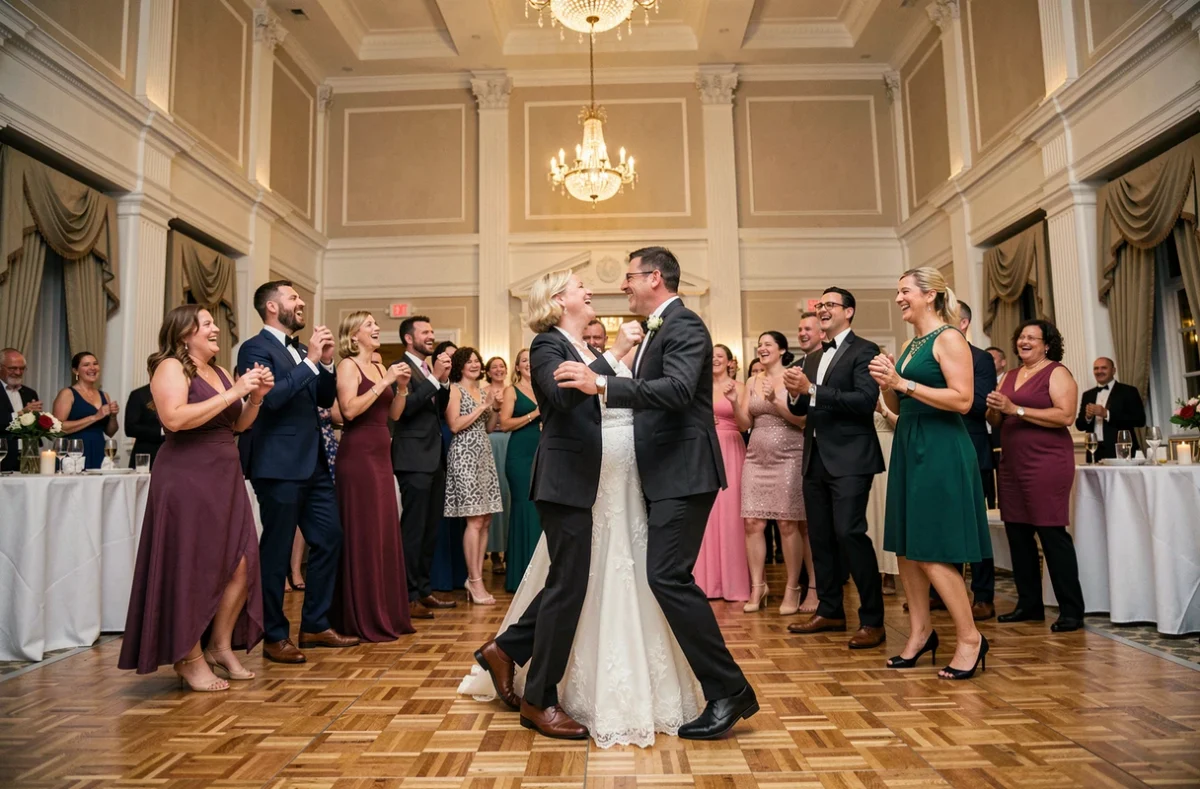
The key range to focus on is 80–150 guests. This is the most common size for a wedding in France, and it’s where adding a subwoofer makes the difference between a lively dance floor and background music that lacks depth.
Active or passive speakers for a wedding
Active speakers have a built-in amplifier. They connect directly to a mixing desk, with no need for an external amplifier rack. For a wedding setup, this simplicity cuts down on setup time and reduces the risk of faulty connections.
Passive speakers require a separate amplifier, giving you more precise control over the power. This setup makes sense when a sound technician is on hand throughout the evening. For a solo DJ or a setup without an engineer, active speakers are still the most reliable choice.
Speaker placement: a factor that affects the sound more than power
A pair of powerful speakers placed on the floor against the back wall will be too loud for guests in the front rows without properly reaching the back of the room. Placement matters more than the wattage on the label.
- Raise the speakers to around 1.80 m off the floor using stands, so the sound travels over people’s heads and reaches farther without being harsh for those close to the source.
- Angle each speaker slightly toward the dance floor, at about 45 degrees to the wall, so the sound beams cross in the center of the dance area.
- Place the subwoofer or subwoofers on the floor against a wall or in a corner, since low frequencies travel in all directions and benefit from the wall-loading effect.
- If the room is more than about 20 meters deep or L-shaped, add fill speakers halfway down the room and set them to a lower volume to cover dead zones.
Careful speaker placement lets you turn down the overall volume while keeping the sound clear and even. This helps avoid triggering a limiter and keeps guests who prefer to chat away from the dance floor comfortable.
Microphone, mixing desk, and power supply: often-overlooked essentials
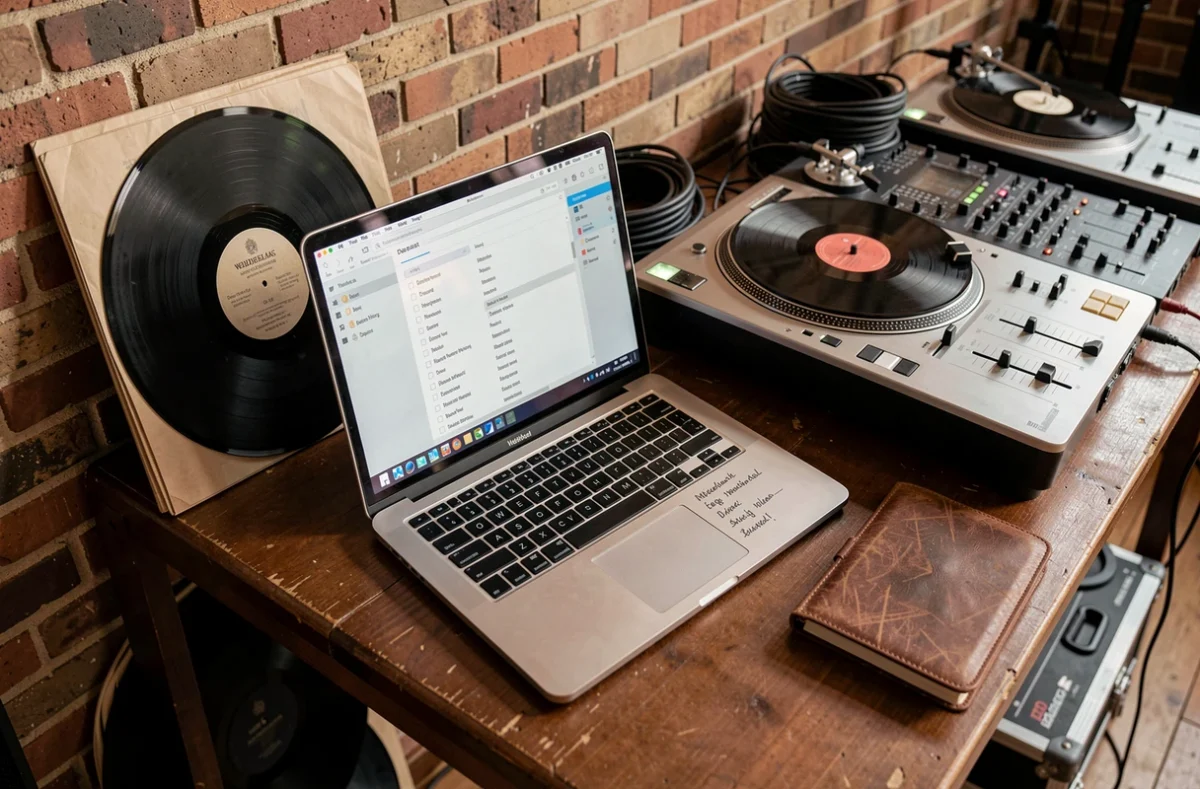
A wireless microphone is used for speeches, toasts, and sometimes the non-religious ceremony. A handheld wireless dynamic microphone covers most needs. Keep a spare pair of fresh batteries on hand to avoid the microphone cutting out halfway through a speech.
The mixing desk doesn’t need to be complicated. Two to four inputs are enough: one for the microphone, one for the main music source (DJ deck or computer), and one for a backup source (phone or portable player). Check that the desk has an equalizer on each channel so you can adapt the sound to the room’s acoustics.
Power and cabling: the shared-circuit pitfall
Plugging the sound system and lighting into the same electrical circuit can cause audible interference (crackling, humming). If the venue has a limited electrical panel, ask for a dedicated circuit for the sound system. Tape cables to the floor with gaffer tape to reduce the risk of trips and accidental disconnections during the party.
Choosing a wedding sound system is less about the advertised power and more about matching the equipment to the venue and its regulatory constraints. Checking the limiter, testing speaker placement before the big day, and securing the power supply are three practical steps that can make the difference between an unforgettable dance floor and a party where the sound cuts out at the first chorus.