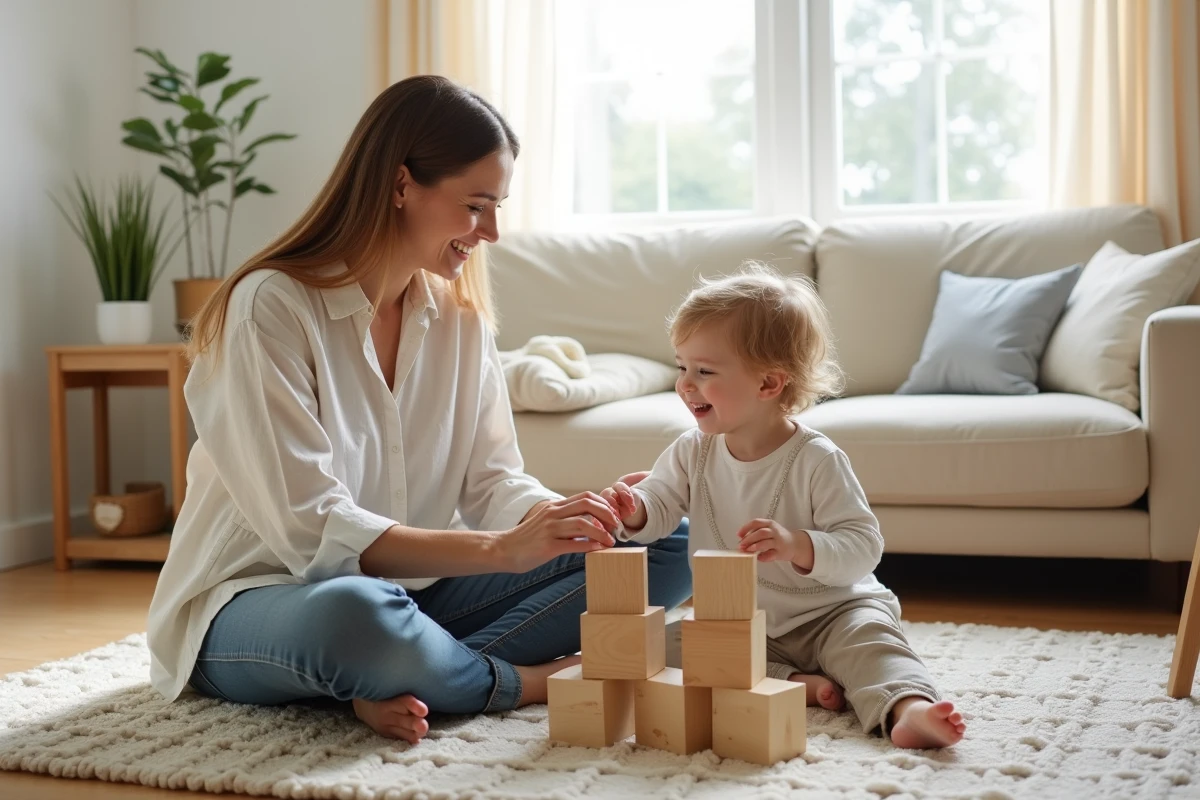
Parenting encompasses all the educational, emotional, and organizational practices that an adult puts in place to support a child’s development. This definition, seemingly simple, becomes complicated as soon as we step outside the traditional family structure. Single-parent families, blended families, shared custody: each configuration imposes concrete adjustments in routines, the distribution of responsibilities, and the management of emotions.
AI and Family Routines: Personalizing Without Dehumanizing
Applications powered by artificial intelligence now offer to generate schedules tailored to the constraints of each household. Meals, homework, extracurricular activities, travel time between two homes: the algorithm compiles these variables and suggests an adjusted timetable.
For a blended family where children alternate between two homes, this type of tool reduces the mental load associated with coordination. A parent can set the custody days, food allergies, sports schedules, and receive a proposed weekly plan in just a few seconds.
The trap would be to delegate to the machine what pertains to emotional connection. AI organizes time; it does not replace presence. An automatically generated routine is only valuable if it frees up time for shared moments, not if it turns daily life into a logistical dashboard. Setting a reminder to read a story in the evening makes sense. Automating responses to a child’s questions about their day does not.
Specialized resources allow for deeper exploration of these topics. Accessible publications on https://www.sofamily-mag.fr/ regularly discuss the interplay between digital tools and family life, with concrete feedback.

Positive Parenting in Blended Families: What the Concept Really Changes
Positive parenting refers to an educational approach based on listening, respecting the child’s emotions, and rejecting arbitrary punishments. The framework remains firm, but punishment gives way to explanation and repair.
In a blended configuration, this approach faces a specific obstacle: the legitimacy of the stepparent. A child living with an adult who is not their biological parent may contest a rule, not out of whim, but because the authority bond has not yet been established.
Establishing a Common Framework Between Two Homes
Consistency between the two households matters more than the perfection of the rules themselves. A child can adapt to minor differences (slightly staggered bedtimes, different menus). What generates anxiety is inconsistency regarding fundamental reference points.
- Safety and respect rules (towards adults, siblings, half-siblings) must be identical in both homes, formulated with the same words if possible
- Screen time deserves an explicit agreement between the two biological parents, as a child immediately spots weaknesses and exploits them
- Transition rituals (a transitional object, a moment of calm upon arrival) help the child move from one home to another without a sudden emotional break
The child does not need perfect rules; they need predictable rules. Predictability creates trust, and trust allows for flourishing.
Emotion Management: Learning to Name Before Seeking to Resolve
A child who throws a tantrum after a weekend at the other parent’s does not express rejection. They show difficulty managing the transition. The first useful reaction is to name the emotion with them, not to correct it.
“You are angry because you wanted to stay longer” works better than “calm down, you will come back next week.” The first sentence validates the feeling. The second denies it.

Developing a Shared Emotional Vocabulary
Families that practice verbalizing emotions daily notice a gradual decrease in crises. The mechanism is straightforward: a child who can say “I am frustrated” has less need to show it through disruptive behavior.
Some concrete practices facilitate this acquisition:
- Using visual aids (emotion wheel, illustrated cards) during meals or at bedtime for the child to identify their state
- Parents themselves verbalize their own emotions in front of the child, normalizing emotional expression and dispelling the idea that adults “feel nothing”
- Setting aside a weekly moment, short and screen-free, where each family member shares a pleasant moment and a difficult moment from their week
This last ritual works particularly well in blended families, as it gives each child, whether present full-time or in shared custody, a guaranteed and regular space for expression.
Family Rhythm and Slow Parenting: Slowing Down to Observe Better
Slow parenting proposes reducing the overload of activities to give the child unstructured time. The principle is not to eliminate all extracurricular activities but to ensure that each activity meets a real need of the child, not a parental anxiety of “doing well.”
A bored child develops creativity, self-regulation, and autonomy. A child whose every minute is occupied learns to execute, not to choose.
In families where the rhythm is dictated by two distinct parental schedules, the risk of overload is amplified. Each parent compensates for their absence with activity proposals. The child ends up with a busier schedule than a corporate executive during the fiscal close.
Slowing down the family rhythm requires a joint decision. Fewer imposed activities lead to more spontaneous shared moments. These moments, a fit of laughter while preparing dinner or an unexpected conversation on the way to school, build childhood memories much more solidly than a tennis lesson on Wednesday at four o’clock.
Flourishing parenting does not rely on a single model or a miracle tool. It is built on the ongoing adjustment between the child’s needs, the constraints of daily life, and the adults’ ability to remain available, including emotionally. The last lever, often overlooked, remains the simplest: accepting that the perfect home does not exist, and that it is precisely this embraced imperfection that makes family life livable.