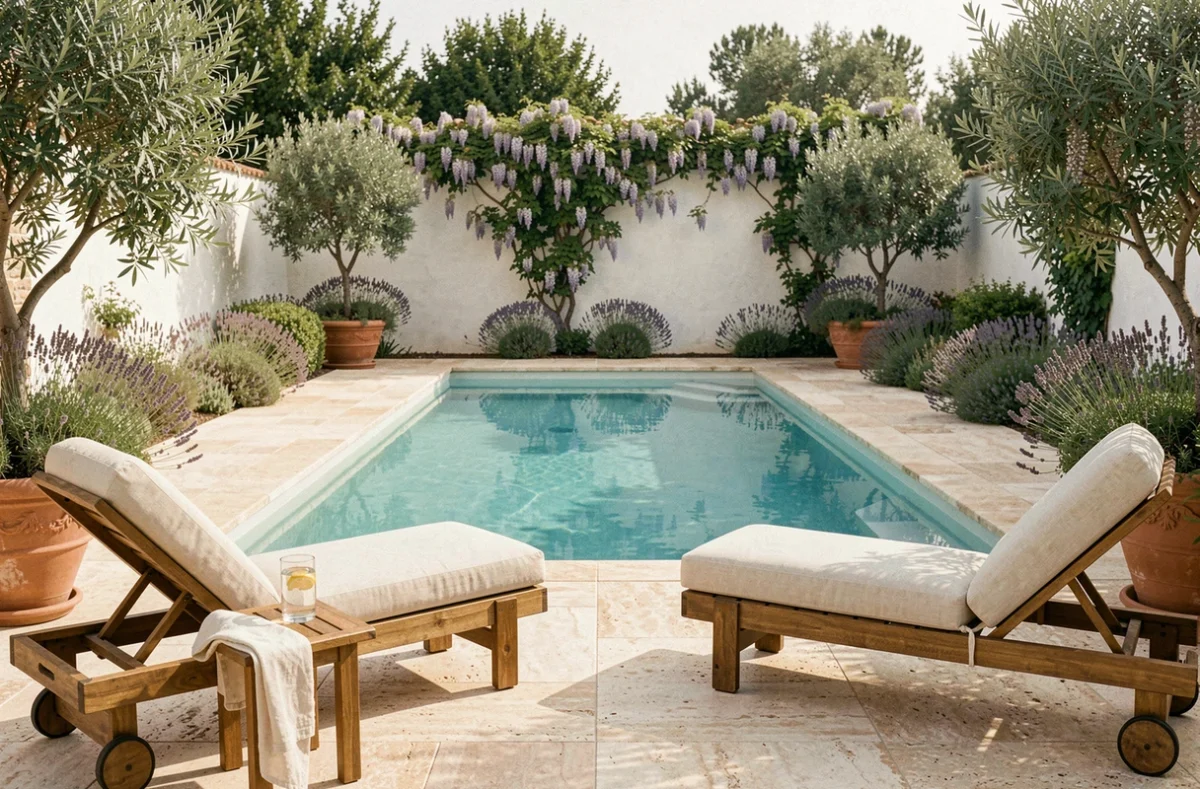
An in-ground pool requires at least one safety device from four regulated categories (barrier, alarm, cover, enclosure). Designing the layout around this requirement, rather than adding it as an afterthought, makes a dramatic difference to the visual harmony of the pool surround and its surroundings. The choice of safety device determines circulation routes, furniture and even the types of plants that can be placed right next to the pool.
Pool cover integrated into the design scheme
A pool cover is not a utilitarian accessory to hide away. Chosen during the design phase, it becomes a defining feature of the setting. Submerged roller covers disappear beneath the waterline, leaving the entire coping clear. More visible bar covers are available in colors that complement reconstituted stone or composite wood decking.
A well-chosen cover reduces evaporation and heat loss, extending the swimming season without the need for an oversized heating system. The savings depend on the installation and local conditions, but the impact on comfort is measurable within the first few weeks.
Where space allows, a low sliding enclosure offers a compromise between protection and aesthetics. Its aluminum and polycarbonate structure creates a discreet volume that does not interrupt the garden’s sightlines. We recommend including the guide rail in the initial landscaping plans to avoid an unsightly raised section on the finished patio.
To explore more pool decorating ideas, combining the cover with the furniture is the first step toward a cohesive layout.
Pool surround design that stands up to water restrictions
Permission to build a pool does not guarantee that you can fill it freely all year round. During droughts, filling and topping up the pool may be restricted by a prefectural order. A sustainable design anticipates this reality rather than being caught off guard by it.
In practical terms, this informs three design decisions:
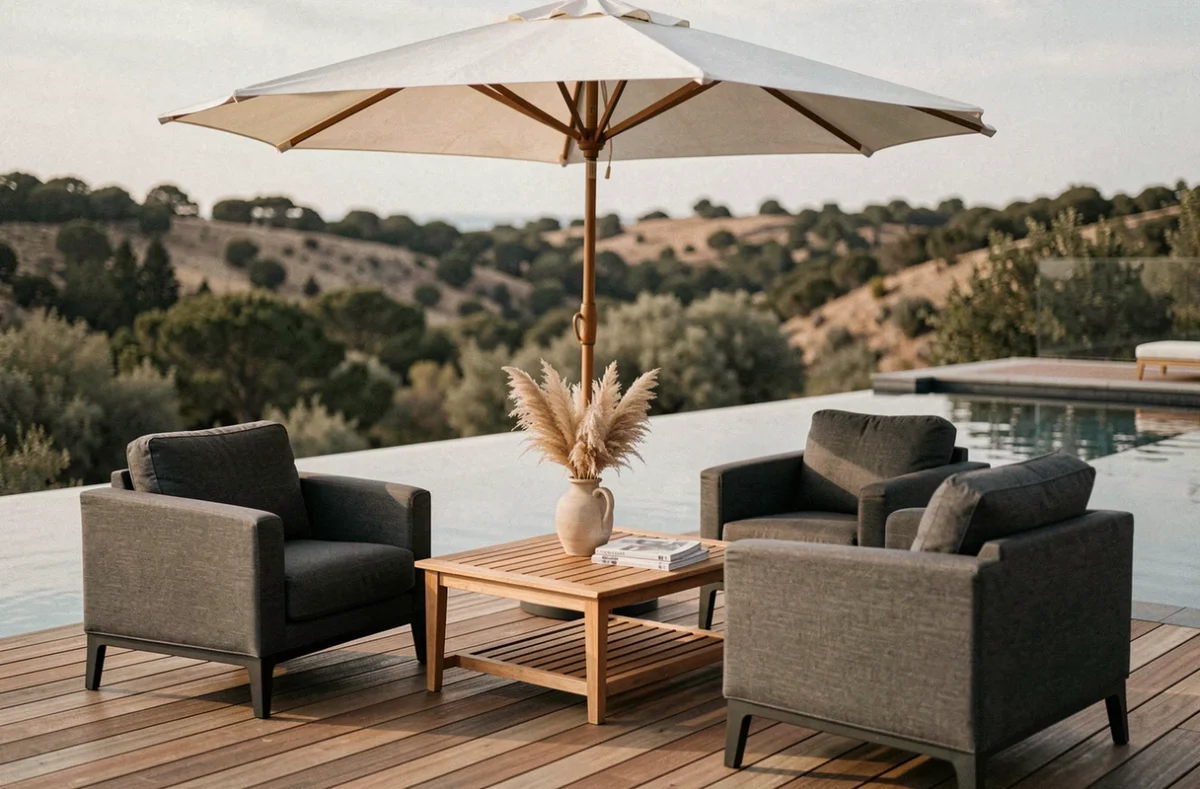
- Choose light-colored coping and pool decking (natural stone, travertine, sand-colored porcelain stoneware) that still look attractive when the pool is covered or partially drained, rather than dark paving that only comes to life with reflections from the water.
- Create a self-contained lounge area with low seating, a side table and a bioclimatic pergola that can be used independently of swimming. The pool terrace becomes a fully fledged outdoor living space, not just a border around the pool.
- Install a simple decorative water feature (a closed-loop fountain or overflowing urn) to maintain an aquatic feel without significant water use, even when the pool is covered.
This approach turns a single-purpose space into a versatile place to relax. The pool remains the focal point, but the terrace still works visually and practically outside the swimming season.
Pool safety and movement around the terrace
The safety device determines the flow of foot traffic around the pool. A poorly positioned perimeter barrier divides the terrace into two disconnected areas. If the access gate faces the house, it creates a bottleneck that funnels everyone through the same spot.
The solution is to map out circulation routes before deciding where to install the fence. Setting the barrier at least one meter back from the coping creates a comfortable walkway around the pool. This space also allows for tall planters or ornamental grasses in containers to soften the fence posts without blocking the view of the water.
Transparent or plant-covered barrier
Toughened glass panels offer complete transparency but need regular cleaning to prevent limescale marks. Powder-coated aluminum barriers are easier to maintain and can support star jasmine or star jasmine vine, which blend them into the surrounding greenery over two to three growing seasons.
Incorporating safety into the garden design from the outset avoids the “fenced-in park” effect seen in most installations where the safety device was added after the pool was completed.
Outdoor pool lighting and a spa-like atmosphere
Lighting sets the mood after dark and lets you enjoy the terrace long after sunset. Two layers of lighting are enough to create a spa-like atmosphere without turning the garden into a football field.
Warm-white underwater LED lighting (around 3,000 K) gives the water an inviting hue, far removed from the clinical blue of halogen lights. Recessed spots in the coping, aimed toward the bottom of the pool, prevent glare from the seating area.
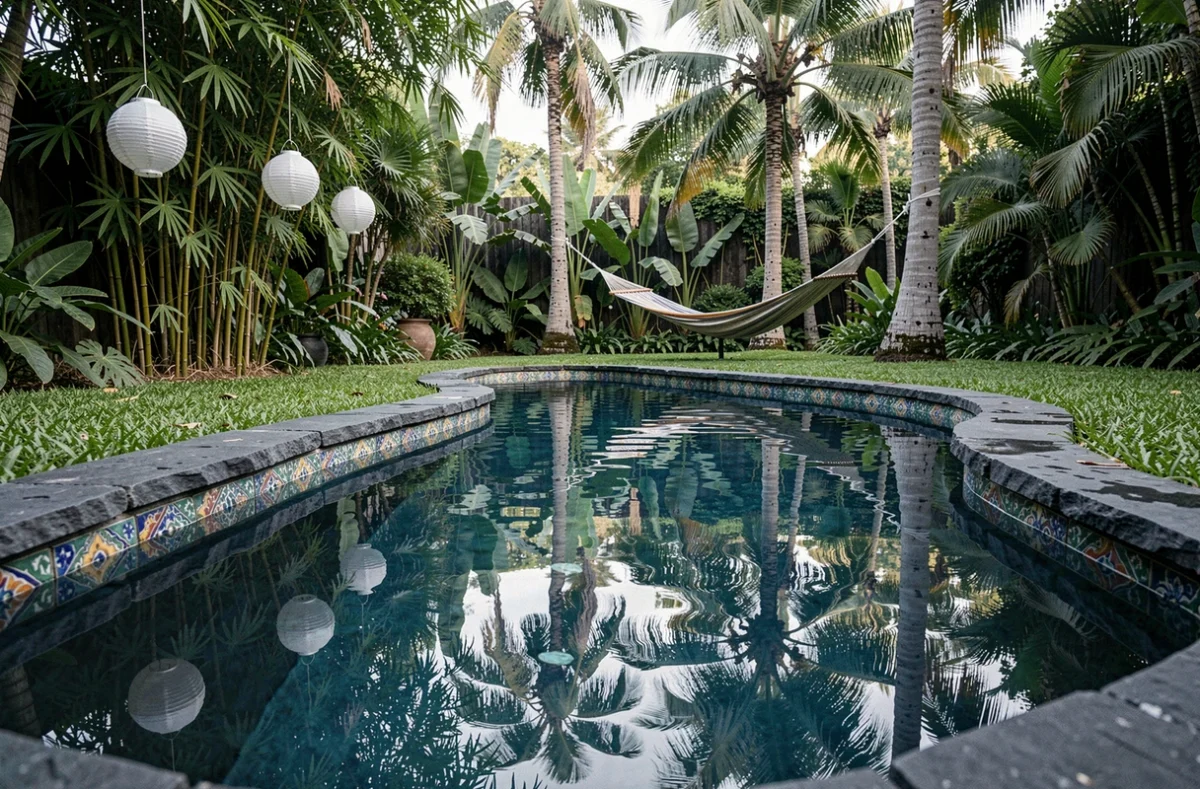
Low bollard lights along the access path and string lights suspended beneath the pergola add indirect lighting that defines the space without creating harsh patches of shadow. Smart dimmers let you adjust the brightness to suit the occasion: dining, swimming or reading.
Plants and furniture for a welcoming pool area
Plant choices depend directly on how close they are to the pool. Deciduous or heavy-flowering varieties (oleander, bougainvillea) litter the water and clog the skimmers. Ornamental grasses (miscanthus, fountain grass), potted agaves and cloud-pruned olive trees add volume without shedding debris.
For furniture, high-density woven resin or teak seating can withstand chlorinated splashes and direct sunlight. Arranging seating in groups of two or three pieces creates intimate little spaces instead of a row of sun loungers lined up facing the pool.
A successful pool area is about more than choosing beautiful objects to place around the water. Cohesion comes from bringing together the cover, safety device, circulation routes and lighting. When every technical element is treated as a design decision from the outset, it contributes to a space where elegance never comes at the expense of everyday practicality.