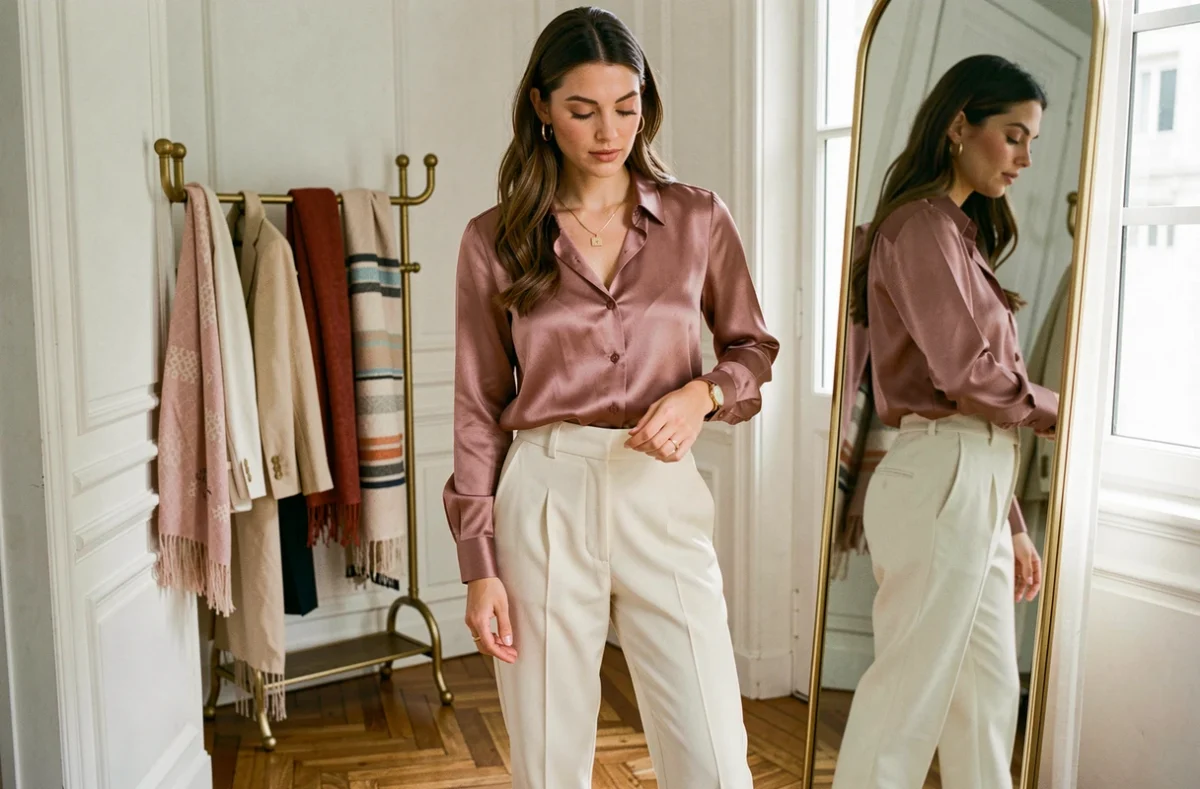
Improving your clothing style doesn’t require emptying your bank account. A few concrete adjustments to your current clothes, your shopping habits, and your outfit composition can change the perception you project. Here are ten actionable tips, listed in no particular order, to transform your look on a daily basis.
1. Have your clothes tailored
Pants that are too long dragging on the floor or a jacket with shoulders that drop two centimeters too low immediately break a silhouette. Before buying new, visit a tailor. A simple adjustment of a pant hem or the tapering of a shirt can radically change the appearance.
A garment tailored to your body is better than a poorly cut new one. Focus on three pieces that you wear each week: the visual gain will be immediate.
2. Limit your palette to three colors per outfit
Have you ever noticed that an outfit seems “too busy” without understanding why? Most often, the problem comes from the number of colors. A maximum of three shades per look is a reliable guideline. For example: dark jeans, an ecru sweater, and brown shoes.
To delve deeper into clothing style on Media Gaga, this principle of chromatic coherence regularly serves as the foundation for any successful outfit.
Black, white, navy blue, and gray work together effortlessly. Start with these neutrals, then add a single bright color if you want to energize the whole.
3. Invest in fabrics that hold their shape
A wrinkled garment by midday gives an impression of negligence, even if the cut is good. The choice of fabric determines the garment’s longevity. Oxford cotton, fine merino wool, or thick jersey hold their shape much longer than lightweight synthetic materials.
When buying, crumple a corner of the fabric in your hand. If it doesn’t bounce back in a few seconds, it won’t do better on you after three hours sitting at a desk.
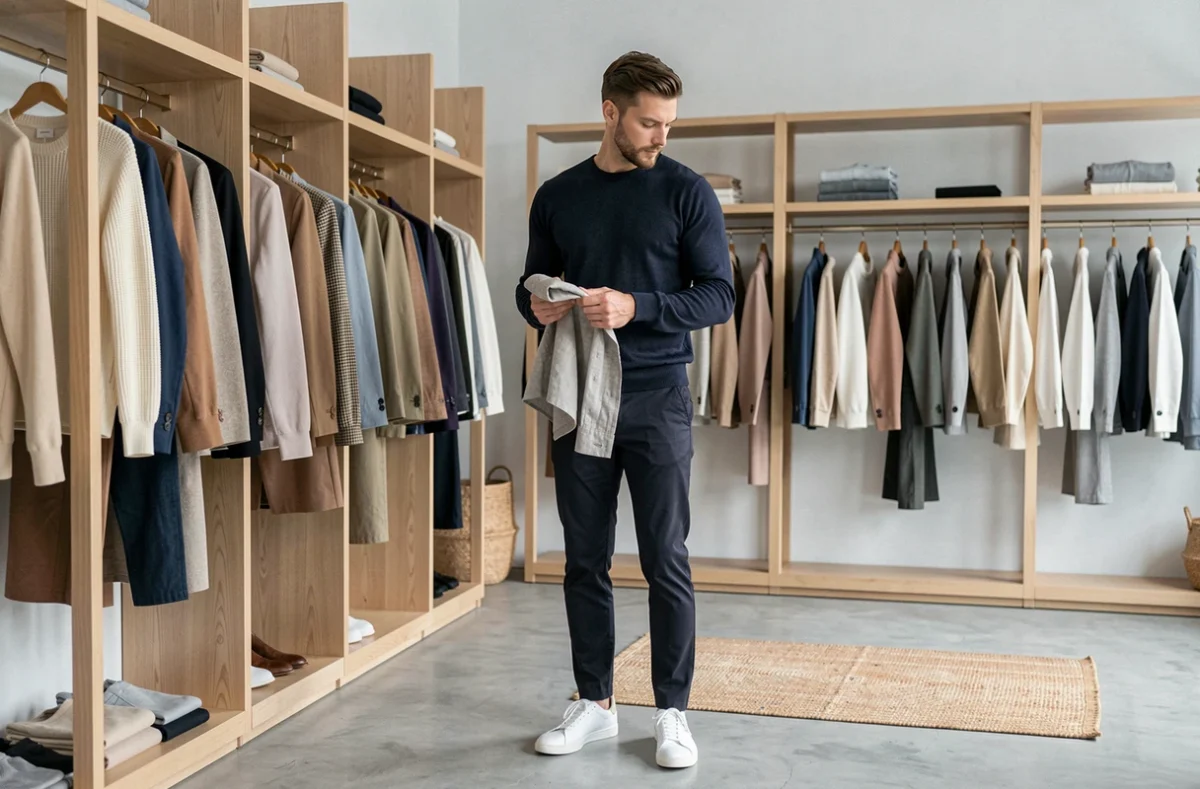
4. Roll up your sleeves and pant hems
Rolling up the sleeves of a shirt or linen blazer to the elbow transforms a formal outfit into a controlled casual look. The same principle applies to jeans: a cuff of a few centimeters at the bottom of the pants shows the ankle (or sock) and visually lightens the silhouette.
This tip costs nothing and takes ten seconds. It works particularly well on slightly too long pieces that you haven’t had tailored yet.
5. Wear only one statement piece per outfit
A checked coat, a printed scarf, and colorful sneakers worn together neutralize each other. One statement piece per look is enough to create a focal point. The rest of the outfit remains understated and serves as a backdrop.
Specifically, if you choose a patterned sweater, keep the pants solid and the shoes discreet. This simple rule avoids visual overload without confining you to monotonous outfits.
6. Maintain your shoes every week
Shoes are the first element noticed in an outfit, and the last one cared for. A quick polish on leather shoes or a wash for canvas sneakers changes everything.
- Smooth leather: a wipe with a damp cloth, then a clear or tinted polish, once a week.
- White sneakers: a toothbrush with a mixture of warm water and Marseille soap removes most stains.
- Suede and nubuck: a dedicated crepe brush, always dry, to avoid staining the material.
Clean shoes elevate even the most basic outfit. It’s a detail that many neglect, making it an easy lever for distinction.
7. Incorporate a second-hand piece into every outfit
The second-hand market is growing faster than traditional clothing. Beyond the economic aspect, buying second-hand allows you to find pieces that no one else around you wears: a vintage tweed jacket, a worn leather jacket, or a 1990s Hawaiian shirt.
Mixing a second-hand piece with new basics creates a contrast that personalizes your style. You wear something that no one else in your circle has, without spending a fortune.
8. Choose accessories that structure the silhouette
A well-placed accessory alters the perceived proportions of your body. A belt, for example, marks the waist and visually separates the top from the bottom. Worn over an oversized sweater or a flowing dress, it reshapes the silhouette effortlessly.
A watch, sunglasses, or a structured bag play a similar role: they draw the eye to a specific point. One well-chosen accessory replaces three clothing purchases.
9. Apply the rule of thirds for proportions
Why do some outfits look harmonious while others seem unbalanced? Often, it’s a question of proportions. The rule of thirds involves visually dividing your silhouette into three unequal parts rather than two symmetrical halves.
In practice, this means tucking a top into high-waisted pants (one third on top, two thirds on the bottom) or wearing a long coat open over a short top (two thirds on top, one third on the bottom). This intentional imbalance elongates the silhouette and adds movement to the outfit.
10. Prepare your outfits the night before
In the morning, pressed for time, you fall back on the same combinations by reflex. Preparing your outfit the night before gives you time to apply the previous principles: check the color palette, choose a statement piece, adjust the accessories.
- Lay out the complete outfit, including shoes and accessories, and place it on a hanger or chair.
- Check that nothing is wrinkled or stained.
- Try a change from your habit: a turtleneck instead of a shirt, or ankle boots instead of sneakers.
Preparing the night before transforms an automatic routine into a conscious choice. This is often where the difference lies between “getting dressed” and “putting together an outfit.”
None of these ten tips require a complete wardrobe overhaul. Start with the one that resonates with you the most, test it for a week, then move on to the next. Clothing style is built through small repeated decisions, not by a big swipe of the credit card.