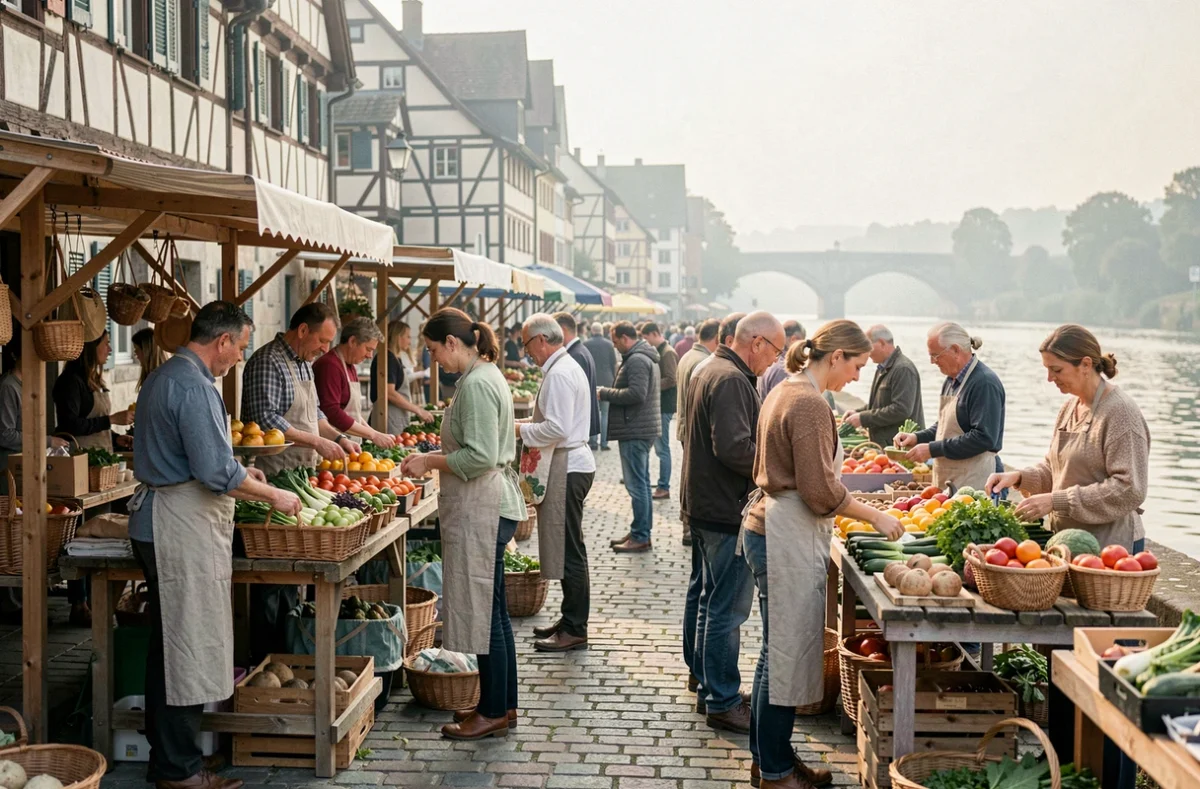
The Rhine territory covers two departments, Bas-Rhin and Haut-Rhin, and a border strip where economic flows, cultural programming, and environmental issues intersect. Following the local life of the Rhine means observing how these dynamics combine throughout the seasons, between festivals, cross-border cooperation, and constraints related to the river itself.
River transport on the Rhine: when drought reshapes local life
Cultural and festive agendas occupy the majority of the Alsatian media space. However, one topic slips under the radar: drought is significantly disrupting river transport on the Rhine. According to L’Alsace, the prolonged absence of precipitation in September 2026 continues to affect commercial navigation on the river.
The Rhine is not just a backdrop for Sunday strolls. It is a major logistical axis connecting the ports of Strasbourg and Mulhouse-Ottmarsheim to European river networks. When water levels drop, barges reduce their cargo, which increases the cost of transporting goods and pushes some operators to switch to road transport.
This situation has direct repercussions on the riverside communities: slowed supply, increased pressure on the road network, and questions about water resource management. For the residents of the Rhine, it serves as a reminder that local life is not limited to festive events; it also depends on the health of the river.
The affected municipalities regularly relay this information through their newsletters and inter-municipal websites. By consulting the news on the CC Rhin website, residents can follow the evolution of these issues at the level of their community of municipalities.
European Mobility Week in Strasbourg: program and issues
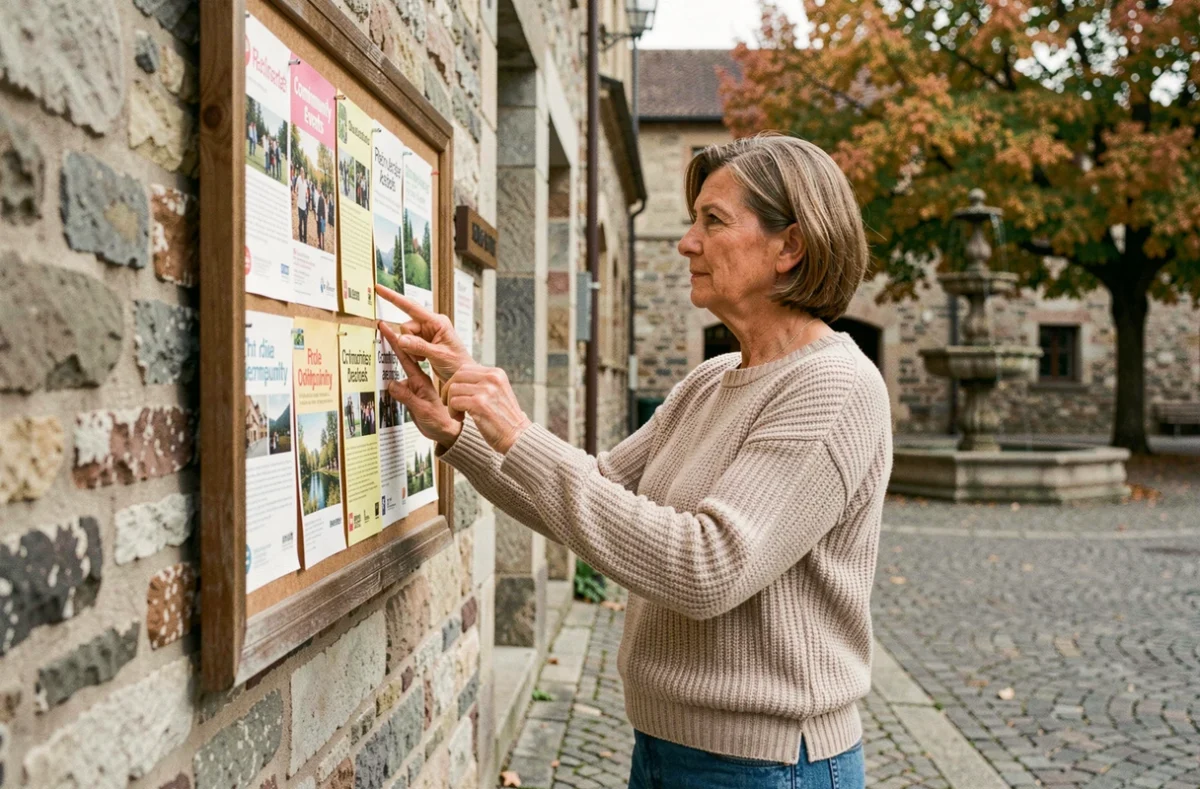
From September 12 to 27, 2026, the European Mobility Week gained particular significance in the Eurometropolis of Strasbourg. The programming was not limited to a car-free day; it spanned over two weeks with various formats.
The 2026 edition coincided with the 30th anniversary of the Vélostation association, a local player in utility cycling. On this occasion, several events took place:
- An exhibition dedicated to urban cycling, tracing three decades of cycling practice in Strasbourg and neighboring municipalities
- Guided nature walks along the banks and canals, designed to discover lesser-known cycling routes
- A bike fair allowing individuals to buy or sell second-hand equipment at accessible prices
This type of programming illustrates an underlying trend: mobility is becoming a structuring theme of local cultural life. Alsatian communities are no longer just creating bike paths; they are organizing events to embed the change in practices into daily life.
Franco-German Employment Forum in Mulhouse: concrete cross-border cooperation
The forum “Warum nicht!” was held in Mulhouse on September 16, 2026, with a renewed format. Historically focused on presenting work and training opportunities in Germany, the forum expanded its scope: German companies came to recruit directly on-site, and the event was open to everyone throughout the day.
This change in format reflects a reality of the Rhine basin. The Franco-German border structures the economic life of thousands of workers who cross the Rhine every day. Cross-border employment is not an abstract issue in Haut-Rhin: it is a direct component of the local labor market.
The transition from an information fair to a true recruitment forum shows that the organizers have acknowledged a concrete demand. Visitors no longer come just to learn about the legal framework for working in Germany; they are seeking immediate employment.
Autumn festivals and celebrations along the Rhine: 2026 edition
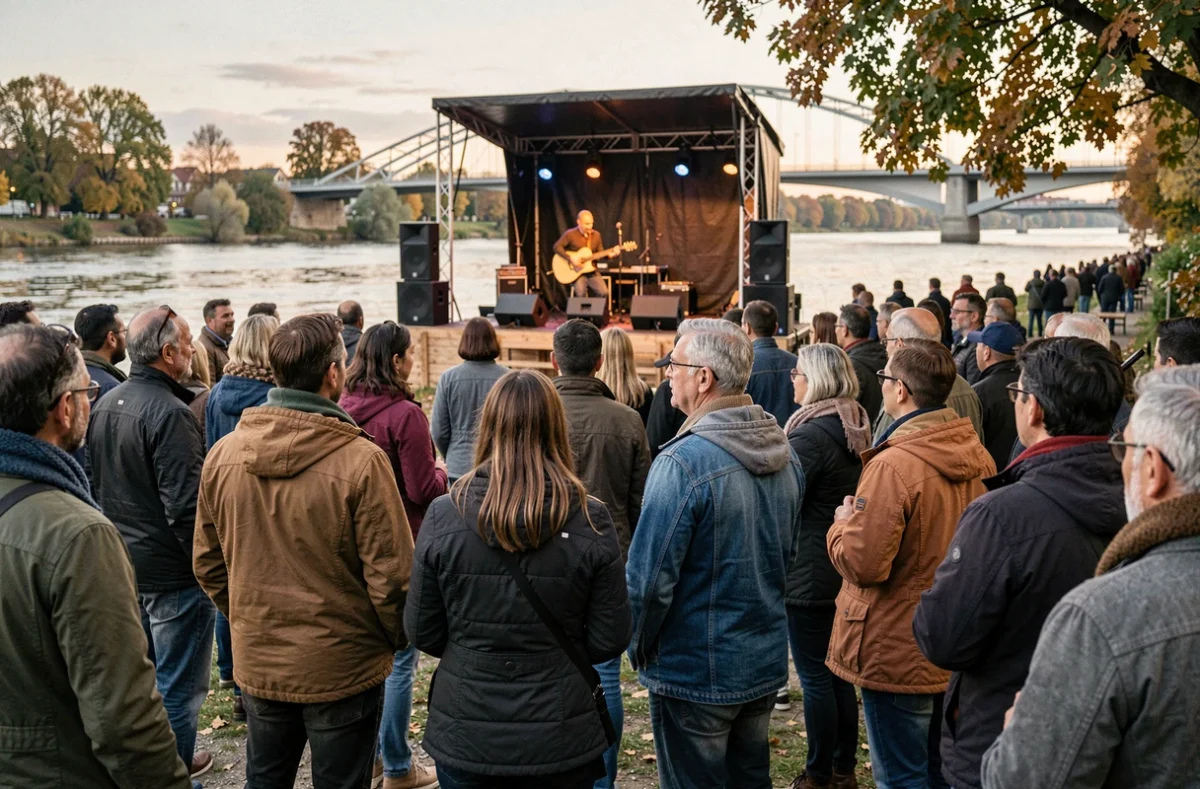
Autumn remains the season with the most festive events in the Rhine territory. Several events mark the return in Haut-Rhin and Bas-Rhin.
These events are not mere entertainment. They contribute to the tourism economy of the communities and rhythm local associative life, as most rely on the volunteer efforts of festival committees.
Cinema, heritage, and nature: the daily cultural offer
Outside of major festivals, Rhine cultural life relies on a network of smaller but regular events. The European Heritage Days, exhibitions in the museums of Strasbourg and Mulhouse, or discounted cinema screenings form the backdrop of the local offer.
Nature also plays an increasingly prominent role in event programming. Guided walks along the Rhine, birdwatching outings in the Rhine forest, and activities related to the river’s biodiversity attract an audience that does not frequent traditional festivals.
The local life of the Rhine is not just a calendar of outings. It articulates issues of river transport, cross-border cooperation, urban mobility, and cultural heritage. The river itself, through its water level and uses, remains the common thread of these territorial dynamics.