
Fresh coriander, whether in seeds or powder form, does not pose any particular problem on the plate of a pregnant woman. The real issue, which most articles gloss over, concerns concentrated forms: essential oils, hydro-alcoholic extracts, dietary supplements dosed with linalool or geraniol. This is where the distinction between culinary use and therapeutic use radically changes the situation for coriander and pregnancy.
Coriander Essential Oil and Pregnancy: The Problematic Molecule
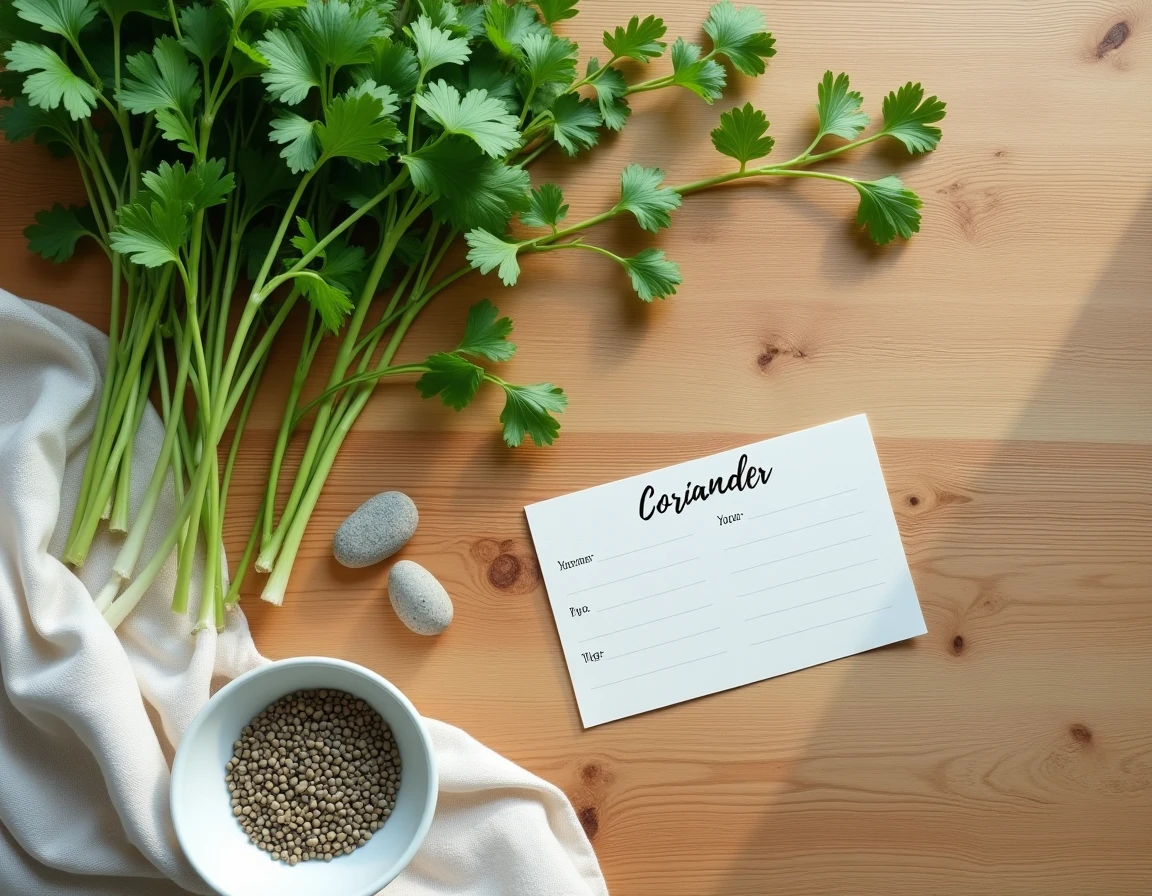
The aromatic molecules in coriander, primarily linalool and camphor, cross the placental barrier. In cooking, the amount ingested remains negligible. In the form of essential oil, the concentration increases by several orders of magnitude.
In France, the DGCCRF issued specific recommendations in 2017 regarding essential oils for pregnant and breastfeeding women. Although these recommendations do not have the force of law, they encourage manufacturers and professionals to advise against the use of coriander essential oils throughout pregnancy and breastfeeding. Perinatal aromatherapy guides align with this position.
As detailed in a report dedicated to coriander and pregnancy according to Viva Médical, some health organizations urge caution regarding extracts that could have a uterotonic effect. The theoretical risk, even in the absence of robust clinical studies on humans, justifies the systematic exclusion of these concentrated forms during gestation.
We recommend a simple rule: any presentation other than raw plant in cooking should be avoided without prior medical advice. This includes dosed coriander seed capsules, mother tinctures, and prolonged atmospheric diffusion.
Coriander Compounds: Useful or Anecdotal Nutritional Profile for Pregnant Women

Fresh coriander provides vitamin K, beta-carotene, and traces of iron. On paper, these micronutrients are of interest during pregnancy. In practice, the amounts consumed in a dish remain too low to cover a real physiological need.
Coriander leaves also contain oxalic acid, an anti-nutrient that reduces the absorption of calcium and iron. For a pregnant woman already at increased risk of iron deficiency, the combination of coriander and iron-rich food in the same meal could theoretically limit the bioavailability of the mineral. Again, at usual culinary doses, the impact remains marginal.
What to Pay Attention to in the Seeds
Coriander seeds, used whole or ground in spices and herbal teas, contain phenolic compounds with antioxidant properties. Their profile differs significantly from that of fresh leaves.
- Linalool, present in high concentration in the seeds, is the compound that warrants caution for concentrated extracts but remains safe at typical food doses
- The fibers from whole seeds promote transit, a concrete advantage against the frequent constipation during pregnancy
- The carminative effect of the seeds, well documented in phytotherapy, can relieve first-trimester bloating without resorting to medication
Seeds in cooking pose no identified risk, provided that ordinary condiment use is not exceeded.
Coriander Herbal Teas During Pregnancy: A Regulatory Gray Area to Know
Coriander seed infusions fall into a gray area. They are neither raw foods nor essential oils, but their concentration of active principles exceeds that of a simple seasoning.
In France, there is no specific regulation governing herbal teas for pregnant women outside of occasional warnings. The DGCCRF focused on essential oils in 2017, leaving infusions in a relative void. The health professionals we consult generally adopt a pragmatic position: an occasional cup of coriander herbal tea does not present a risk comparable to a concentrated extract.
The situation differs for herbal tea blends containing several plants with potential uterotonic effects (fennel, anise, coriander). The cumulative effect of these plants has not been evaluated in pregnant women. As a precaution, we advise against unsupervised multi-plant blends.
Differentiating Forms of Coriander: A Practical Decision Grid
The table below summarizes the level of risk according to the form of coriander consumed during pregnancy.
| Form | Concentration of Active Principles | Recommended Position |
|---|---|---|
| Fresh leaves in cooking | Very low | No restrictions |
| Whole or ground seeds (condiment) | Low | No restrictions |
| Seed herbal tea (occasional infusion) | Moderate | Acceptable in moderation |
| Hydro-alcoholic extract or capsules | High | Avoid without medical advice |
| Essential oil (oral, topical, or diffusion) | Very high | Contraindicated |
This grid is based on the principle of dose-dependence. The potential toxicity of coriander is directly related to the concentration of aromatic molecules, not to the plant itself.
Spices to Monitor
Coriander often appears in spice blends like curry, ras el hanout, or garam masala. These preparations combine several plants, some of which (high-dose turmeric, fenugreek, Ceylon cinnamon) have specific warnings during pregnancy.
- Culinary amounts of turmeric pose no problem, but dosed supplements are not recommended for pregnant women
- Fenugreek, common in curries, has a documented uterotonic effect at high doses
- Ceylon cinnamon powder remains acceptable in cooking, unlike Chinese cinnamon (cassia), which is richer in coumarin
Checking the composition of a spice blend before using it regularly during pregnancy remains a reasonable precaution, especially for artisanal preparations without detailed labeling.
Ultimately, the topic of coriander during pregnancy boils down to a question of form and dose. Leaves in a tabbouleh, seeds in a broth: no warning signs. Essential oils and concentrated extracts: clear exclusion. Between the two, herbal teas require a minimum of discernment, ideally guided by a healthcare professional familiar with the obstetrical file.