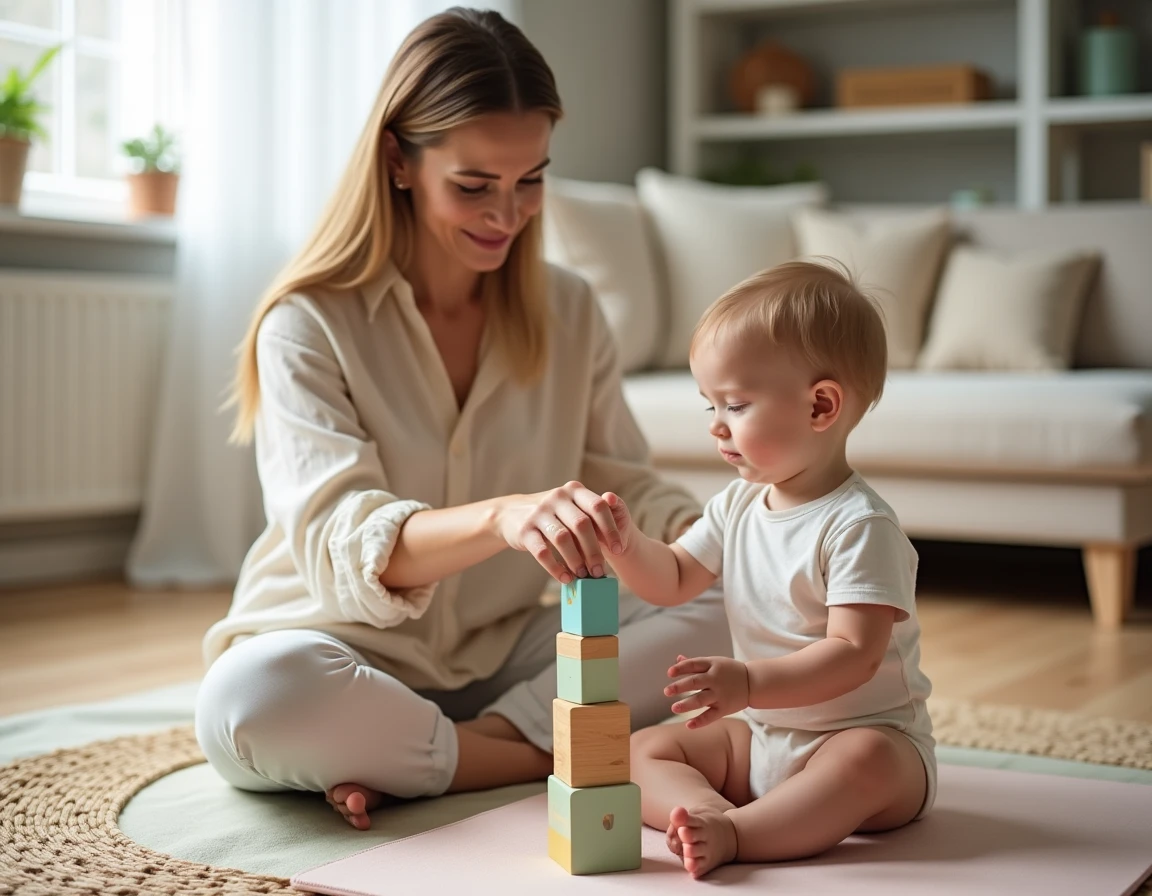
An eighteen-month-old child methodically emptying a kitchen drawer is not misbehaving. They are sorting, weighing, and testing the durability of objects. It is precisely this type of mundane situation that forms the foundation of daily awakening. Supporting your child’s development and well-being relies less on accumulating educational toys and more on the quality of interactions and how we structure their days.
Screens before two years: what the HAS recommends for young children’s awakening

We often start by looking for sophisticated awakening activities, while the first concrete lever concerns what we remove from the environment. The Haute Autorité de Santé recommends avoiding all screens before the age of two. After this age, the limit remains strict, and above all, co-usage takes precedence over passive screen time: watching with the child, commenting, interacting.
Data links early exposure to screens with sleep disorders and language delays. In practice, this means that a tablet placed in front of a baby during a meal does not stimulate their development; it hinders it. The resources available on petitsbambins.fr detail concrete alternatives to occupy a child without resorting to screens, even during moments when the adult needs a break.
When introducing a screen after two years, the operational rule is simple: sit next to the child, name what they see, ask questions. A cartoon watched together becomes a language support. The same cartoon watched alone in a corner remains wasted time for learning.
Nature outings and sensory awakening: what INSERM’s work shows

The power of a simple walk in the woods is often underestimated. Research from INSERM and several international studies published since 2022 show that regular contact with green environments reduces cortisol in young children. Physiological stress decreases, attention improves, and free play naturally occurs.
Specifically, a child walking barefoot on grass, touching bark, or observing insects simultaneously engages touch, sight, smell, and proprioception. No plastic toy replicates this sensory richness.
Integrating nature without revolutionizing your schedule
No need to hike for three hours. A park ten minutes from home is sufficient, provided you go regularly. The key is repetition and the freedom to explore.
- Let the child collect stones, leaves, and sticks: manipulating natural objects of various shapes develops fine motor skills much better than a standardized building game
- Accept that they will get dirty: direct contact with dirt, water, or sand is an integral part of sensory awakening, and feedback on this point varies among families, but the benefits are documented
- Name what they observe out loud: a bird, a puddle, the sound of the wind – each word associated with a sensation reinforces language development
Child autonomy: the role of furniture and layout
A stable stool in front of the sink changes everything. A child who can wash their hands alone, grab their toothbrush, or fill a glass of water gains autonomy without needing intervention. This principle comes from Montessori pedagogy, but you don’t need to adhere to a complete method to benefit from it.
Placing everyday objects at child height transforms the living space into a learning environment. A low coat rack for their coat, an accessible bin for their toys, a three-tier shelf for their books: these simple adjustments encourage the child to do things for themselves.
Parenting and letting go of the outcome
When a two-year-old puts their shoes on the wrong way, the temptation to correct them immediately is strong. Resisting this urge is part of the support process. Making mistakes is the main learning mechanism at this age. A child who realizes on their own that their shoe is uncomfortable eventually understands the meaning, and this understanding is worth much more than an imposed correction.
The same principle applies to meals: a child who eats with their fingers before mastering the spoon explores textures and temperatures. The cleanliness of the table takes a back seat when considering what is happening on a sensory and motor level.
Emotional stability and quality of care: new requirements in daycare
The reform of early childhood care, gradually implemented in France since 2022, has strengthened the requirements around the stability of caregivers and emotional support in daycare. Professionals must now undergo specific training on emotional development and parenting support.
For parents, this evolution has a direct implication: the continuity of the bond with a reference adult is as important as the quality of the activities offered. A child who sees the same familiar face at daycare every morning feels secure, and this security is the foundation upon which all other awakening rests.
What can be replicated at home
The regularity of rituals plays the same role as the stability of a caregiver in a care structure. A predictable sequence (bath, story, song, bedtime) does not restrict the child. On the contrary, routine frees mental energy to explore the rest. A child who knows what comes next can focus on what is happening now.
- Maintain regular meal and sleep schedules, even on weekends, to anchor the circadian rhythm
- Verbalize transitions (“after snack time, we will go to the park”) so the child can anticipate and prepare
- Set aside a calm moment each day, without directed activity, where the child freely chooses what they want to do
The well-being of a child is not measured by the number of toys in their toy box or the frequency of awakening workshops. It is built in the quality of daily exchanges, the freedom to move, contact with the living world, and the reliable presence of an attentive adult. The kitchen drawer will always remain a valid exploration ground.