The veal paupiette presents a specific technical problem when reheating: the stuffing and the escalope do not have the same thermal conductivity. The outer meat quickly reaches a high temperature on the surface while the heart of the stuffing remains warm. This differential creates both a health risk (insufficient temperature zone in the center) and a texture defect (drying out of the outer layer).
Mastering reheating relies on a few principles of thermal transfer applied in home cooking.
Thermal gradient and stuffing: why the veal paupiette dries out when reheated
The veal escalope, thin and lean, loses its free water long before the stuffing (a denser mixture, often enriched with breadcrumbs and egg) reaches the same temperature. We systematically observe the same defect: the surface is dry while the heart remains insufficiently warm.
The microwave exacerbates this phenomenon. The waves penetrate unevenly into a heterogeneous product. The stuffing, being more compact and moist, absorbs energy differently than the meat. The result: localized hot spots that cause the fibers of the outer meat to burst while other areas stagnate at too low a temperature.
Reheating in a covered oven, on the other hand, works through slow convection. The hot air envelops the paupiette evenly, and the steam trapped under the lid or aluminum slows down surface evaporation. This is the only method that respects the composite structure of the paupiette.
Rapid cooling after cooking: the point that recipes forget
Poor cooling compromises preservation even before refrigeration. Health recommendations emphasize a quick passage through the critical temperature zone. Leaving cooked paupiettes at room temperature for more than two hours creates a favorable environment for bacterial growth, particularly in the stuffing which remains warm longer than the meat.
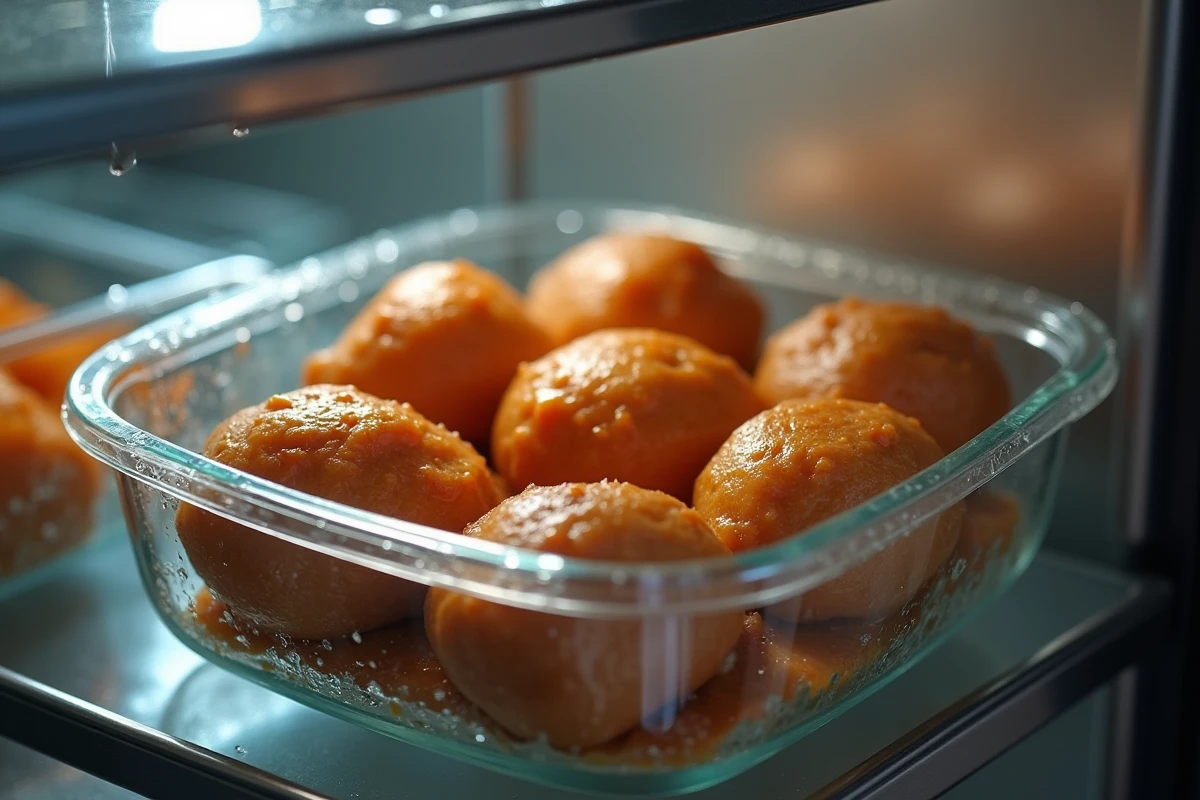
To delve deeper into the techniques of preserving and reheating veal paupiettes, we recommend transferring the cooked paupiettes to a shallow container as soon as service is finished. A wide dish where the pieces do not overlap accelerates the temperature drop. Covering the dish once the paupiettes are warm (and not hot) prevents excessive condensation that dampens the surface.
Refrigeration: with or without sauce
Storing the paupiettes submerged in their cooking sauce has a concrete advantage: the liquid acts as a barrier against oxidation and drying out. The sauce forms a protective film around the meat, limiting direct contact with the cold air of the refrigerator.
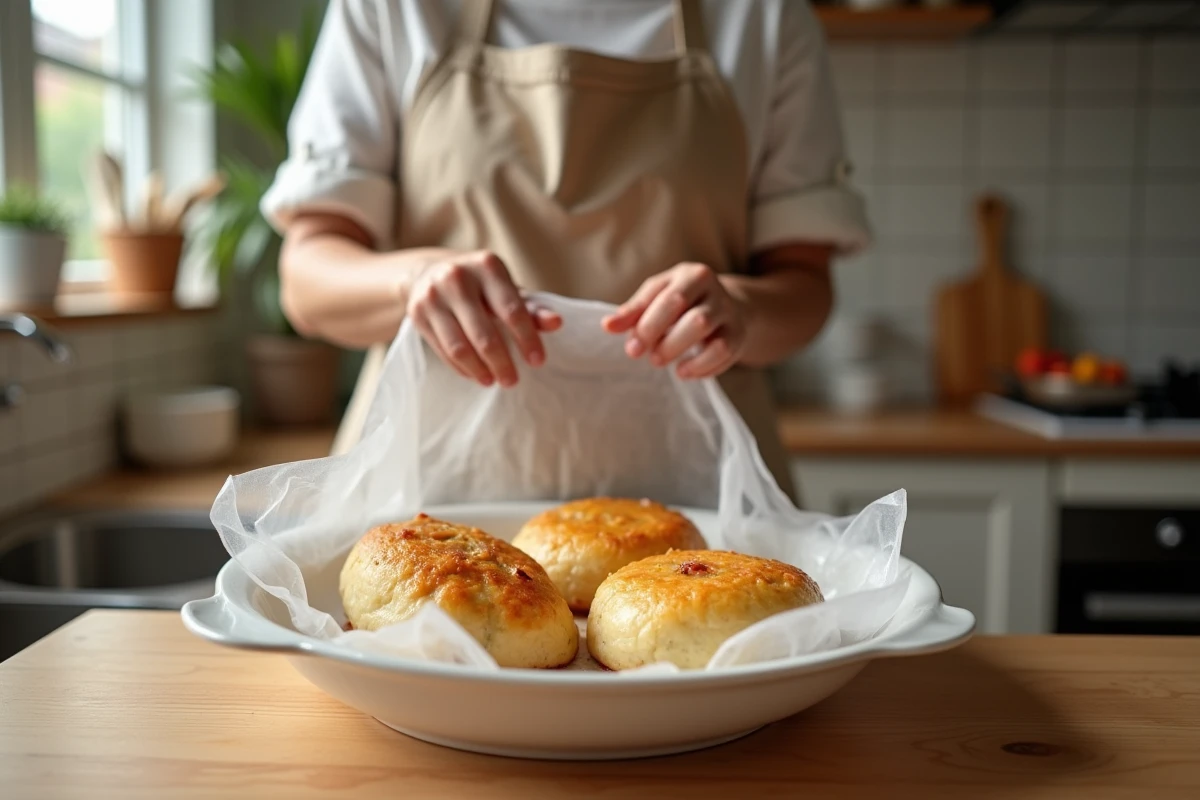
Without sauce, the surface of the escalope dries out within a few hours and takes on a cardboard-like texture when reheated. If you don’t have sauce, using plastic wrap directly in contact with the meat (not just over the edge of the dish) reduces this phenomenon.
Reheating in a covered oven: protocol and temperature for the veal paupiette
The oven remains the reference method for reheating paupiettes without degrading them. Here is the protocol we apply:
- Take the paupiettes out of the refrigerator about twenty minutes before reheating, to reduce the temperature gap between the cold center and the heat of the oven
- Arrange the paupiettes in a single layer in a dish, adding a few spoonfuls of broth or cooking sauce to create a steam bath
- Cover tightly with aluminum foil or a lid, then bake at moderate temperature
- Check that the heart of the stuffing is evenly hot before serving, possibly by cutting into a test paupiette
The classic trap is to raise the oven temperature to save time. Excessively high heat contracts the proteins of the escalope and expels the residual juice. Patience pays off: gentle and long reheating yields a result incomparably better than a brief stint at high temperature.
The role of liquid in the dish
Broth, veal stock, or simply the original sauce serves not only to flavor. As it evaporates slowly under the lid, the liquid saturates the atmosphere of the dish with water vapor. This steam prevents the surface of the paupiettes from losing its own moisture. Without this liquid, even a gentle oven dries out the meat.
We advise against pure water: it dilutes flavors without adding anything. A reduced cooking stock or concentrated broth maintains the flavor consistency of the dish while fulfilling its technical function.
Freezing veal paupiettes: raw or cooked
Paupiettes freeze better cooked than raw. Freezing a raw paupiette poses a texture problem: the ice crystals that form in the moist stuffing break the cellular structure. Upon thawing, the stuffing releases its water and becomes mushy.
Freezing the already cooked paupiette coated in sauce limits this loss of texture. The sauce protects the meat from freezer burn (those white and dry spots that appear on poorly wrapped food). Wrap each paupiette individually or by portion, expelling as much air as possible.
Thawing: never at room temperature
Thawing in the refrigerator remains the only reliable method. It takes time (count on overnight), but ensures that the paupiette does not pass through the critical temperature zone for several hours. Thawing at room temperature allows the surface to warm up well before the center, creating exactly the conditions conducive to bacterial growth.
After complete thawing, reheating follows the same protocol as a simply refrigerated paupiette: covered oven, liquid in the dish, moderate heat.
The success of a reheated veal paupiette depends less on the reheating technique itself than on the quality of each preceding step: rapid cooling, storage in sauce, slow thawing. Each of these steps protects the fragile texture of the escalope and the integrity of the stuffing. Neglecting any of them compromises the final result, regardless of the care taken in the oven.