In 1984, a simple screen-printed t-shirt in Los Angeles sold for more than a new pair of Levi’s jeans. A few years later, brands emerging from skate culture and hip-hop took over the windows of department stores, shaking up the codes of traditional luxury.
The adoption of these clothes by icons of rap and skate has never followed the linear logic of fashion. Collaborations between designers and artists, once deemed unlikely, have become standards, reversing the power dynamics between subcultures and the textile industry.
How streetwear was born on the streets and conquered the world
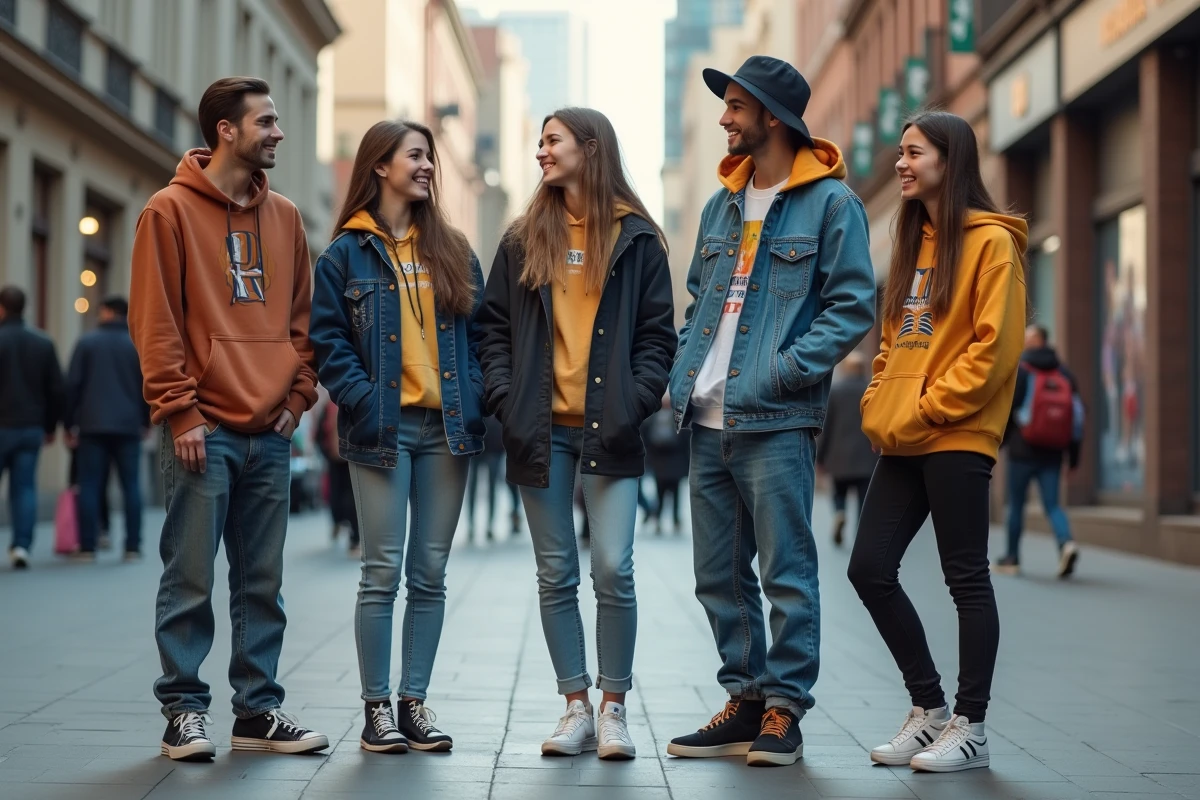
Streetwear did not originate in the plush offices of fashion houses, but on the vibrant asphalt of New York and Los Angeles, in the heart of the 1980s. In these cities, urban culture exploded: kids flooded skateparks, tagged walls with vibrant graffiti, and improvised hip-hop battles on the sidewalks. Their clothing, initially cobbled together and then reinterpreted, mixed punk, skate, surf, and hip-hop. A new silhouette emerged: baggy sweatshirts, unique sneakers, graphic t-shirts, caps, and wide pants. It’s not just about aesthetics: it’s a way to assert belonging, reject rigid codes, and reinvent oneself.
The story doesn’t stop at American borders. In the 1990s, streetwear crossed the ocean, inspired alternative European scenes, and then firmly rooted itself in Japan. Tokyo became a limitless playground: in the streets of Harajuku and Shibuya, Japanese designers reinterpreted the codes of urban fashion, merging local influences with inspirations from elsewhere, and imposing radical creativity. Streetwear then took on global significance.
Over the decades, this movement has gone far beyond clothing. It expresses a need for expression, authenticity, and freedom. Even when propelled to the forefront of runways, it doesn’t forget where it came from: the street remains its laboratory, the ground where each trend is invented away from the spotlight. To learn more about Klottra, explore the history of streetwear: when was it created? Klottra, and discover how this style has established itself as a universal language of urban youth, from New York to Tokyo.
Why streetwear fascinates so much: influences, codes, and key figures
Streetwear is a mirror of popular culture. Each piece claims a story, an attitude. The hoodie combines comfort and freedom; sneakers become symbols of status, sometimes even collector’s items. Together, they compose a silent manifesto, where caps, baggy pants, and graphic t-shirts sketch a shifting, collective, urban identity.
This style does not like boundaries. It draws from hip-hop, skate, punk, and sports, transforming these influences into a universal language. Collaborations between brands and artists, Nike, rap stars, and visual creators, constantly push the limits of fashion. On this stage, figures like Kanye West, Virgil Abloh, Rihanna, or Travis Scott impose their vision, blurring the line between luxury and street, tradition and innovation.
To illustrate the richness of this movement, here are some concrete benchmarks:
- Sneakers: objects of desire, sometimes elevated to the status of art, worn and popularized by icons such as Run-DMC or Travis Scott.
- Hoodie and graphic t-shirt: means of expression and comfort, they become canvases where messages and stances are asserted.
- Collaborations: unprecedented alliances between neighborhoods, luxury houses, and artists, revealing the strength of the collective and the limitless inventiveness of streetwear.
In the wake of these personalities, streetwear establishes itself as a playground for innovation and self-expression. Each garment then becomes an assertion, a response to the norm, a call for free expression.

Cult brands to new trends: what streetwear says about our time
Today, streetwear goes far beyond the question of style. It reflects major social, technological, and generational shifts. On Instagram, TikTok, and other social networks, each launch (“drop”) transforms into a global event, amplified by passionate communities. Rarity and speculation in the resale market turn the purchase of a garment into an act of belonging to a group, a sign of recognition.
The drop culture sets its own pace: limited editions, virtual queues, collective excitement. Everyone hopes to snag the piece that will define the season. Streetwear, with its ability to blend couture and luxury, disrupts traditional markers. Recent collaborations illustrate this: creation now circulates freely, oscillating between street and runways, never settling.
Three major trends shape the future of streetwear:
- Sustainability: younger generations demand responsible materials, transparent manufacturing, and extended life cycles.
- Inclusivity: gender-neutrality is on the rise, the diversity of bodies and identities is displayed and affirmed, driven by independent brands that refuse standardization.
- DIY and vintage: customization, repurposing, recovery, uniqueness becomes central again, and each piece tells a unique story.
Contemporary streetwear has transformed into a space for experimentation and direct expression. Each new creation questions society, shakes norms, and encourages a rejection of conformity. On this shifting ground, fashion becomes a soft weapon, a means to redefine the collective and write, garment by garment, a story in motion.