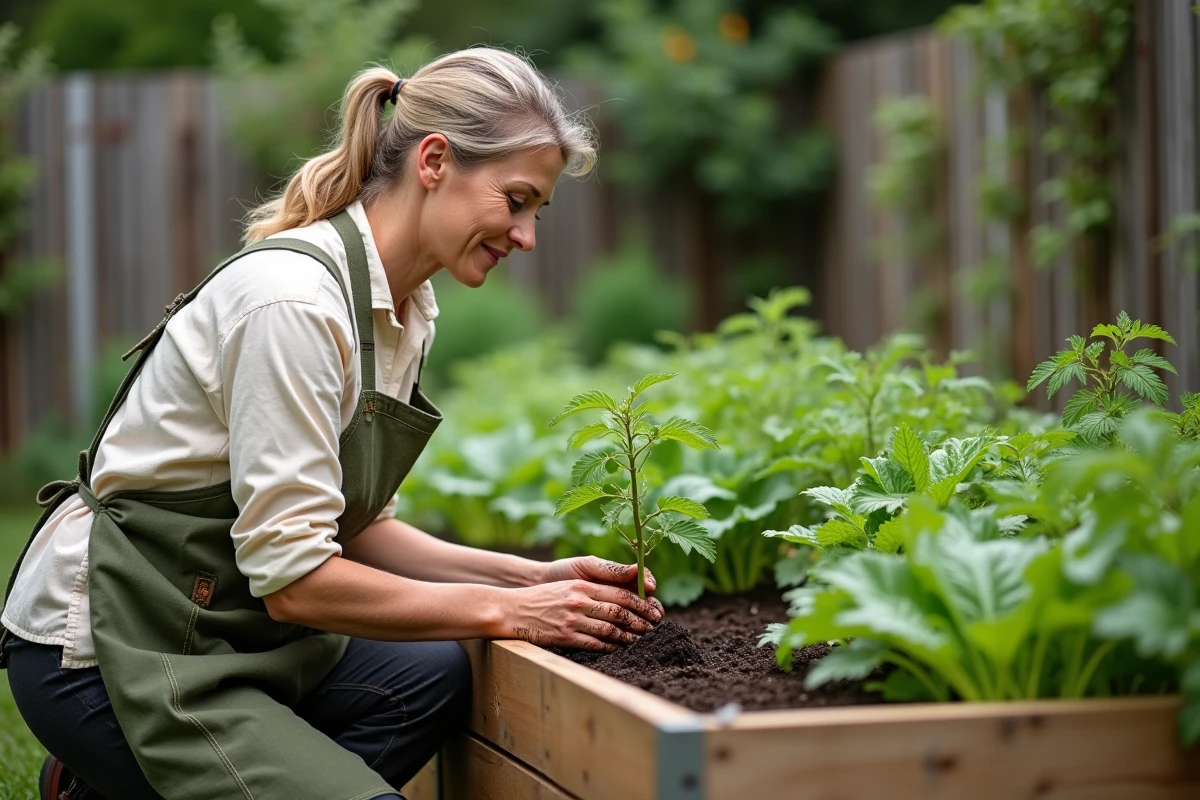
A productive ecological vegetable garden all year round relies less on the accumulation of gestures and more on a fine understanding of soil mechanisms and timing. We regularly observe that failures stem from a common flaw: treating the garden as a succession of recipes instead of managing a living ecosystem.
Soil carbon/nitrogen ratio: the parameter that the ecological vegetable garden requires mastering
The fertility of a vegetable garden soil directly depends on the balance between carbon inputs (straw, wood chips, dead leaves) and nitrogen inputs (fresh grass clippings, manure, legume residues). An excess of carbon immobilizes available nitrogen and hinders vegetable growth. An excess of nitrogen leads to lush foliage without proper fruiting.
We recommend aiming for a ratio of about two-thirds carbon material to one-third nitrogen material in surface inputs. A mulch of dead leaves alone, without nitrogen compensation, produces a visible nitrogen deficiency as early as the following spring: yellowing foliage, stagnant growth.
Well-managed domestic compost remains the best corrector of this ratio, provided that brown and green materials are systematically mixed before spreading. Making your own compost rather than buying a commercial amendment reduces both ecological footprint and costs. To delve deeper into techniques suited to each season, you can visit the Spot Jardin website, which details these practices month by month.
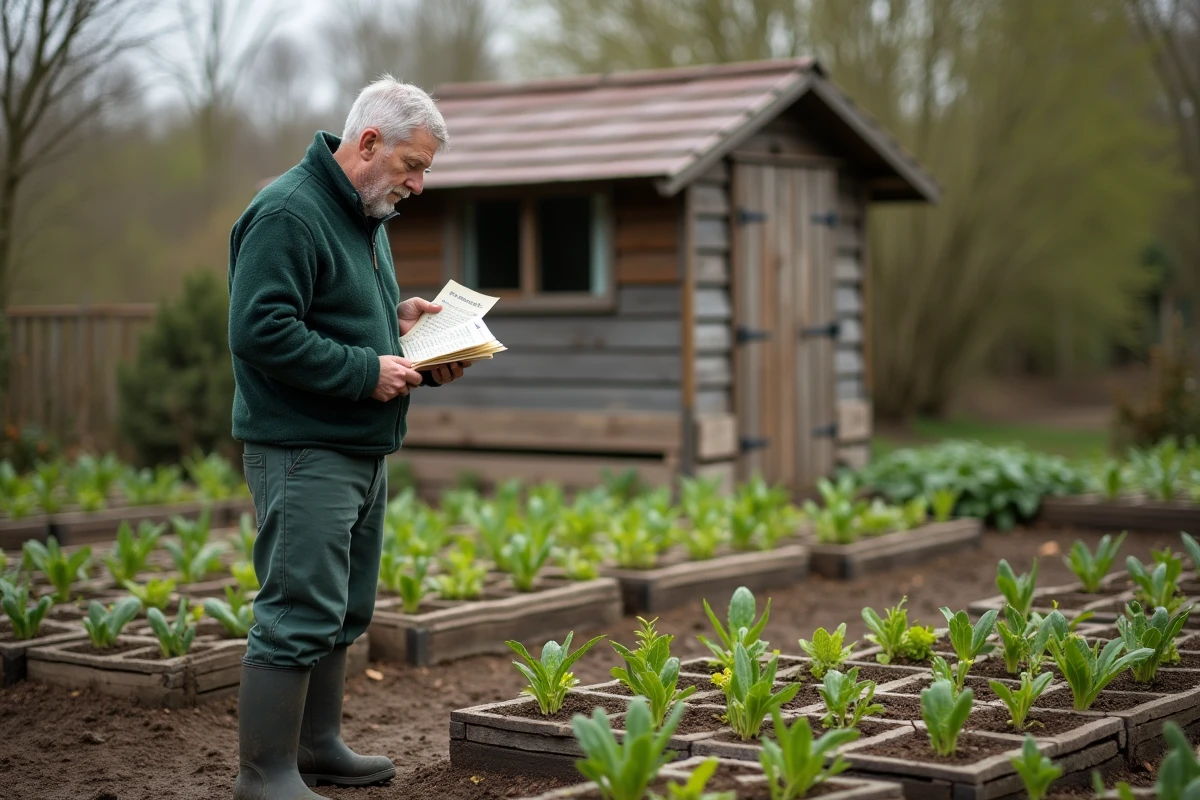
Planning ecological sowing over twelve months
Successfully managing a vegetable garden all year requires a precise sowing calendar, not seasonal improvisation. Most winter failures come from sowing too late at the end of summer: lamb’s lettuce, spinach, and winter cabbages must be in the ground before mid-September in temperate climates.
Home sowing rather than purchased plants
Home sowing offers a double ecological advantage. It eliminates the logistical footprint of plants in plastic pots and allows for the selection of reproducible varieties. Keeping your own seeds from one year to the next closes the loop.
Three points of vigilance for successful sowing all year round:
- Respect the minimum germination temperature of each species, which varies greatly between a tomato (requiring warm conditions) and a radish (germination possible at low temperatures)
- Stagger sowings of the same species every three weeks to spread the harvest and avoid unmanageable surpluses
- Use reclaimed containers (egg boxes, second-hand terracotta pots) rather than new plastic pots, in line with circular economy logic
An ecological vegetable garden productive twelve months a year relies on three waves of sowing: spring for summer crops, summer for autumn-winter crops, and autumn under cover for early spring vegetables.
Water management in the vegetable garden: plant extracts and recovery
Watering represents the most wasteful aspect of a poorly managed garden. Recurring water restrictions in recent years in France require a radical rethink of the water strategy for the vegetable garden.
Reduce watering frequency with thick mulching
A sufficiently dense organic mulch (leaves, straw, wood chips) drastically reduces surface evaporation. We observe that properly mulched soil requires watering only twice a week in the height of summer, compared to nearly daily watering on bare soil.
Rainwater harvesting combined with targeted watering (homemade drip irrigation, buried oyas) is the most effective combination. Foliar spraying wastes water and promotes fungal diseases on tomatoes and cucurbits.
Plant extracts: fertilization and protection without chemical inputs
Nettle extract provides assimilable nitrogen and stimulates soil life. Comfrey extract, rich in potash, promotes flowering and fruiting. These preparations effectively replace commercial liquid fertilizers.
Making them simply requires rainwater and fresh plant material, macerated for one to two weeks. The cost is zero if nettles and comfrey are already growing at the edge of the property, which is common.
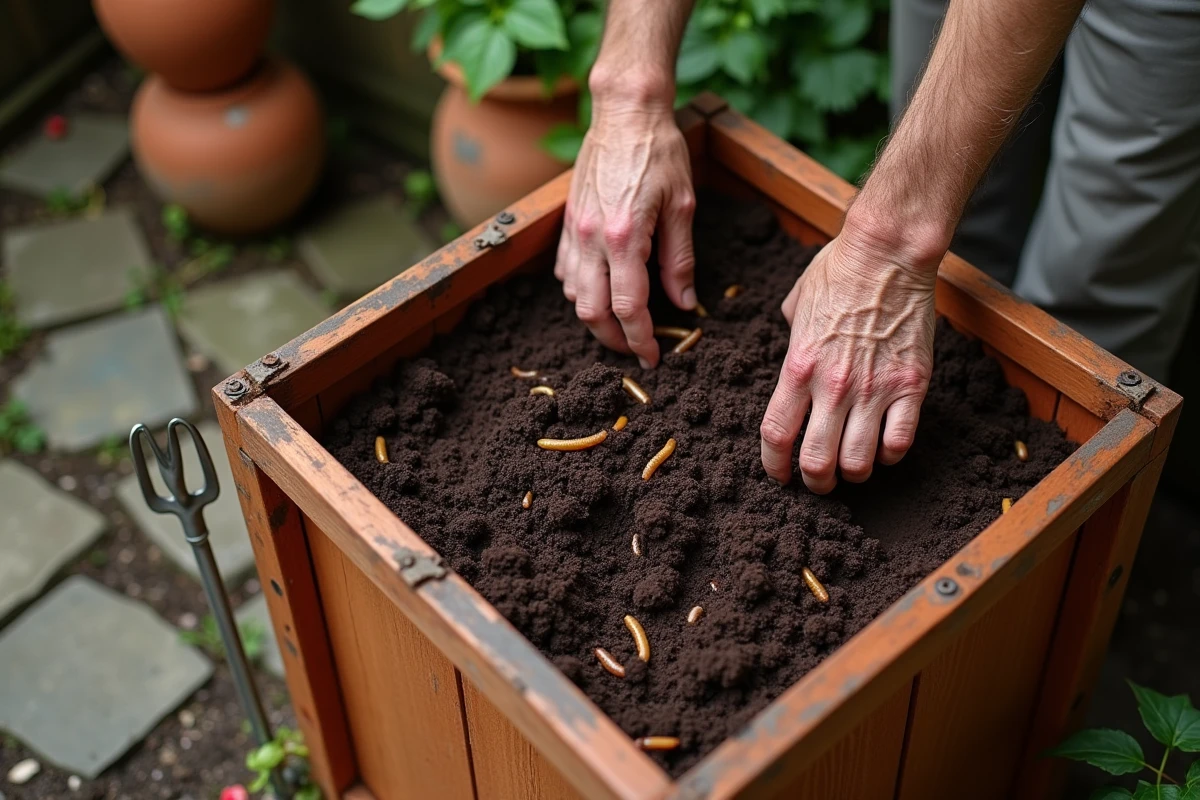
Durable materials and structures in the ecological vegetable garden
The carbon footprint of a vegetable garden is not limited to what grows in it. Composite plastic borders, imported bamboo stakes, disposable cloches: these common accessories negate part of the ecological benefit of pesticide-free cultivation.
We recommend prioritizing:
- Borders and vegetable beds made from certified untreated wood, or reclaimed boards (returned pallets)
- Stakes made from locally cut hazel or chestnut, which last several seasons without treatment
- Winter protections made from burlap or reusable glass cloches rather than single-use non-woven fabric
- Terracotta pots or recycled materials, as a systematic replacement for thermoformed plastic
This choice of materials adds a dimension of circular economy that goes beyond simple organic gardening. A vegetable garden whose infrastructure is designed with local and durable materials significantly reduces its overall footprint.
Continuous training and observation: what distinguishes a sustainable ecological garden
An effective ecological garden evolves each year. Climate conditions change, pests adapt, and soils transform under the influence of mulching and composting. Observing your soil and crops each week is better than following a fixed calendar.
Shared garden workshops, MOOCs on agroecology, and visits to experimental vegetable gardens are concrete resources for adjusting practices. Testing a new plant combination or a local variety each season allows for gradual refinement of the system.
The ecological vegetable garden all year round is not a stable state but a process of continuous adjustment. The best tip remains to keep a cultivation notebook where you note sowing dates, yields, health issues, and weather conditions. This document becomes, season after season, the most reliable guide, because it corresponds exactly to your soil, your climate, and your constraints.