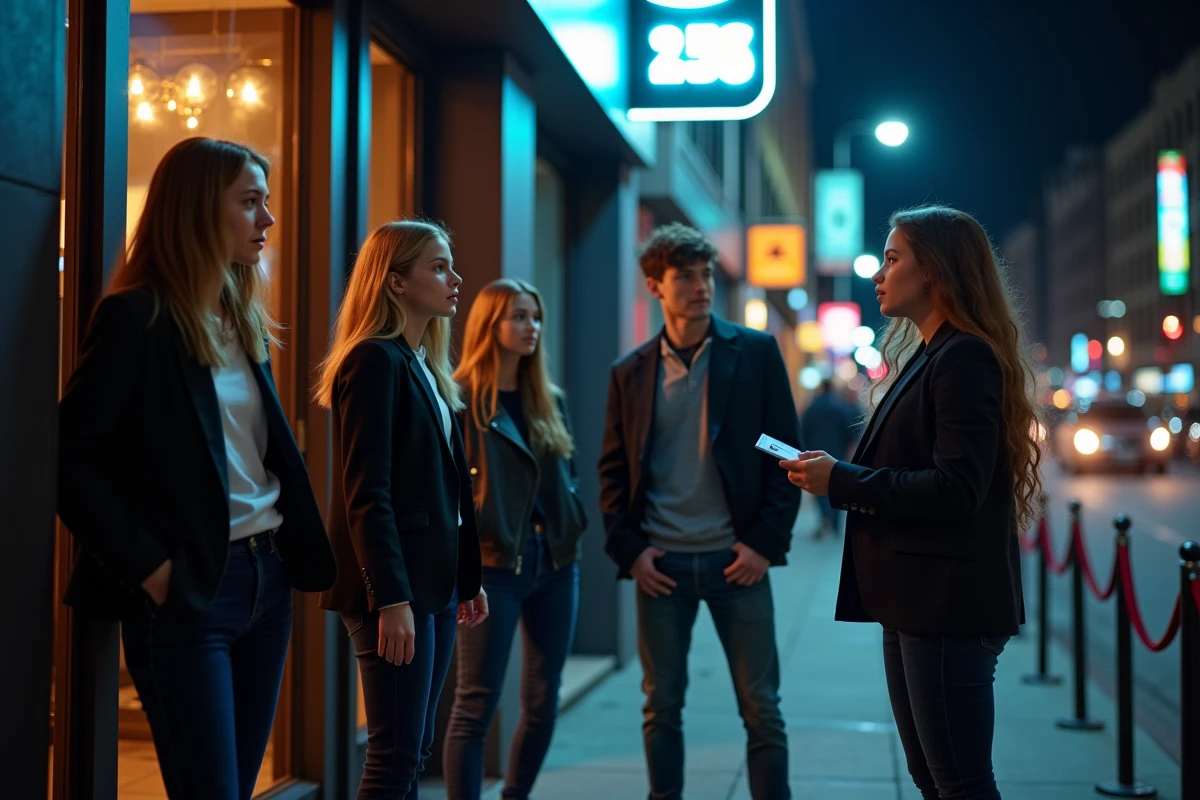
Article L3342-3 of the Public Health Code prohibits admitting a minor under the age of sixteen unaccompanied by a responsible adult into a drinking establishment. At sixteen, the rules change: entry into a drinking establishment is allowed without an escort. The whole issue of access to nightclubs at 16 years old hinges on the gap between what the Code allows and what the operator decides.
Operator’s Responsibility and Nightclub Internal Regulations
French law does not set a specific minimum age for entry into nightclubs. It refers to the general regime for drinking establishments. A club holding a license for the sale of alcoholic beverages therefore applies Article L3342-3 of the Public Health Code, but nothing obliges the operator to accept a 16-year-old, even if the law theoretically allows it.
The internal regulations take precedence. The majority of nightclubs in France set their entry threshold at 18 years, sometimes at 21 years for certain events. The operator bears criminal responsibility in the event of serving alcohol to a minor, which explains the sector’s caution. A bouncer who allows a 16-year-old to enter takes a direct risk for the establishment.
We observe that the recent trend is towards stricter identity checks at the entrance, particularly for the 16-18 age group. The legal risk does not only concern age: it encompasses the sale of alcohol, the safety of the minor within the establishment, and the civil liability of the operator in case of an incident. A comprehensive guide details the age for entering nightclubs in France with nuances depending on the types of establishments.
Distinction Between License Type and Event Type for 16-Year-Old Minors

The license category of the venue determines the applicable legal framework. Minors over thirteen can frequent a drinking establishment holding a first-category license (non-alcoholic beverages only), even without an escort. This point is rarely exploited, as nearly all nightclubs operate under a license allowing the sale of alcohol.
Alcohol-free events organized for 16-18 year-olds are a special case. Some establishments schedule dedicated slots for minors, usually in the late afternoon or early evening. The legal framework remains that of the internal regulations: the operator defines the hours, formally prohibits the service of alcohol, and increases the presence of security personnel.
These events respond to both commercial and regulatory logic. The operator avoids the criminal risk associated with alcohol while attracting a young audience. In practice, we recommend checking three elements before attending:
- The venue’s license and the nature of the event (explicit mention of “alcohol-free” or “minors accepted” on the flyer or website)
- The requirement or not for a written parental authorization, which some clubs systematically request for 16-17 year-olds
- The imposed closing times, often set before midnight for events dedicated to minors
Identity Check at the Entrance: Accepted Documents and Common Refusals
The identity check at the entrance of a nightclub is a private act, not a police verification. The security agent has no legal obligation to check identity, but the operator can impose it in their internal regulations. In practice, nearly all clubs do this.
Accepted documents vary from one establishment to another. The national identity card and passport are recognized everywhere. The driver’s license, which 16-year-olds do not possess (except for AM licenses), is not a valid option. Some clubs refuse photocopies or photos of identification on smartphones.
Refusal of entry remains at the discretion of the bouncer. An establishment can refuse a 16-year-old even if they present a valid ID and a parental authorization. The reserved right of admission, posted at the entrance, covers this situation with no recourse possible for the young person.

Alcohol and Criminal Sanctions: What Minors and Establishments Risk
The sale or offering of alcohol to a minor is an offense punishable by a fine that can reach a significant amount for the operator. The Public Health Code directly targets the person serving the drink, not the minor consuming it. The 16-year-old is not criminally responsible for the purchase, but the establishment is.
This asymmetry explains why clubs prefer to prohibit access to minors rather than manage the alcohol risk inside. Monitoring a minor’s consumption on a crowded dance floor is operationally impossible. An adult friend who orders a drink and hands it to a minor engages the establishment’s liability if law enforcement intervenes.
Parents or legal guardians retain their own civil liability. If a 16-year-old causes damage after leaving a club, the legal representatives can be held accountable, even if they signed an exit authorization.
Parental Authorization and Practical Conditions for Going to a Nightclub at 16
No legal text imposes a model of parental authorization for access to nightclubs. Clubs that require it define the content of the document themselves. Generally, the authorization mentions the name of the minor, the name of the legal representative, the date of the event, and the parent’s signature.
This document has no binding legal value for the operator. It mainly serves as proof of diligence in case of a dispute. A parental authorization does not guarantee entry, it reduces the legal risk for the club.
- Prepare an original identification document (national identity card or passport, no photocopy)
- Contact the club in advance to confirm acceptance of 16-17 year-olds for the targeted event
- Arrange a secure means of return transport, as the closing times for minors are often earlier
The French legal framework leaves significant leeway to nightclub operators. The ground rule remains the club’s policy, not the Public Health Code. A 16-year-old preparing for a night out is better off targeting events explicitly open to minors rather than trying their luck in a standard establishment.