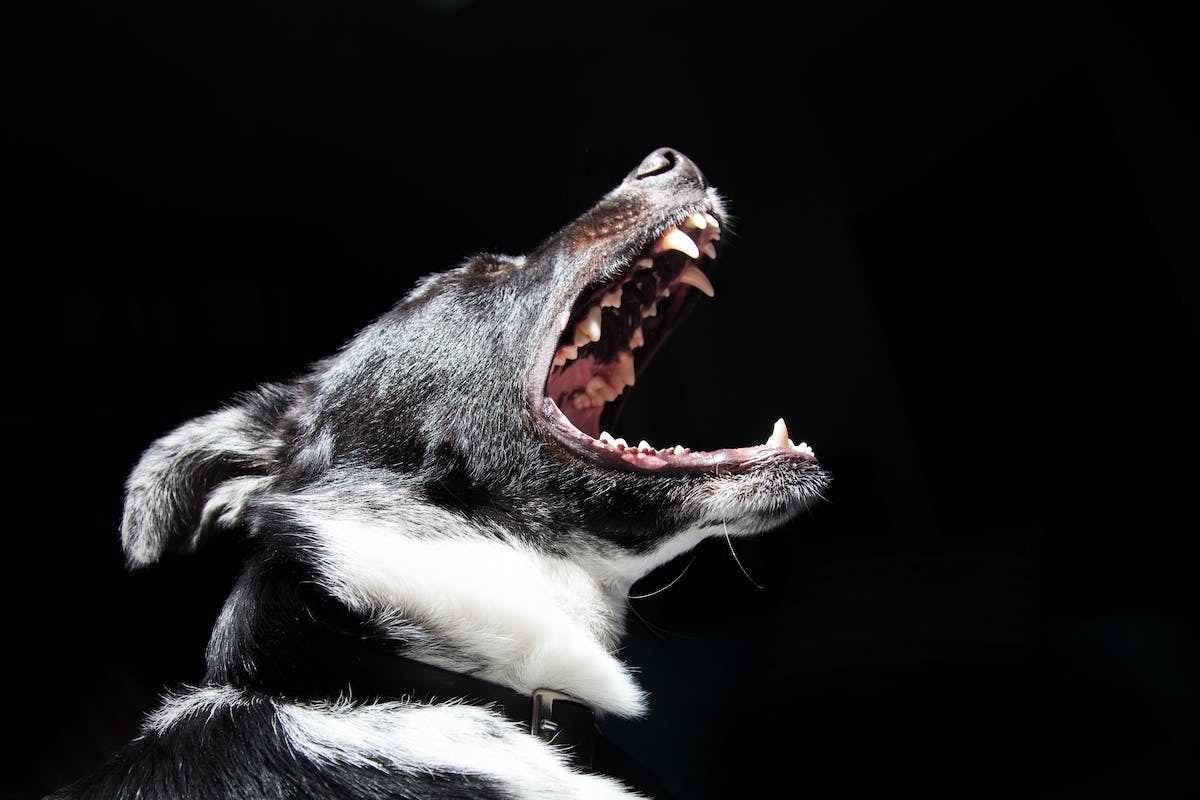
It is commonly accepted that a dog’s strength lies in its ability to run, jump, or play. An often-overlooked component of this strength is the power of their jaws. The ability to bite is an intrinsic trait of these canines, which has evolved over the centuries to adapt to their lifestyle and dietary needs. This trait varies significantly among breeds, with some breeds having a more powerful bite than others. It is crucial to understand this power, not only for human safety but also for the well-being of the animal.
The Power of the Dog’s Jaw: A Formidable Force
The anatomy of the canine jaw is a true marvel of evolution. This complex structure, both strong and flexible, allows the dog to perform an impressive range of actions from shredding bones to executing delicate tasks.
At the heart of this dynamic is the temporomandibular joint (TMJ), where the skull meets the mandible. This essential connection offers great freedom of movement, allowing dogs to open their mouths wide to grasp or bite. The ‘dog jaw power’, as it is commonly called, resides in the harmonious functioning between this key element and the surrounding muscles • primarily the temporalis, masseter, and pterygoid muscles • which provide significant force when they contract.
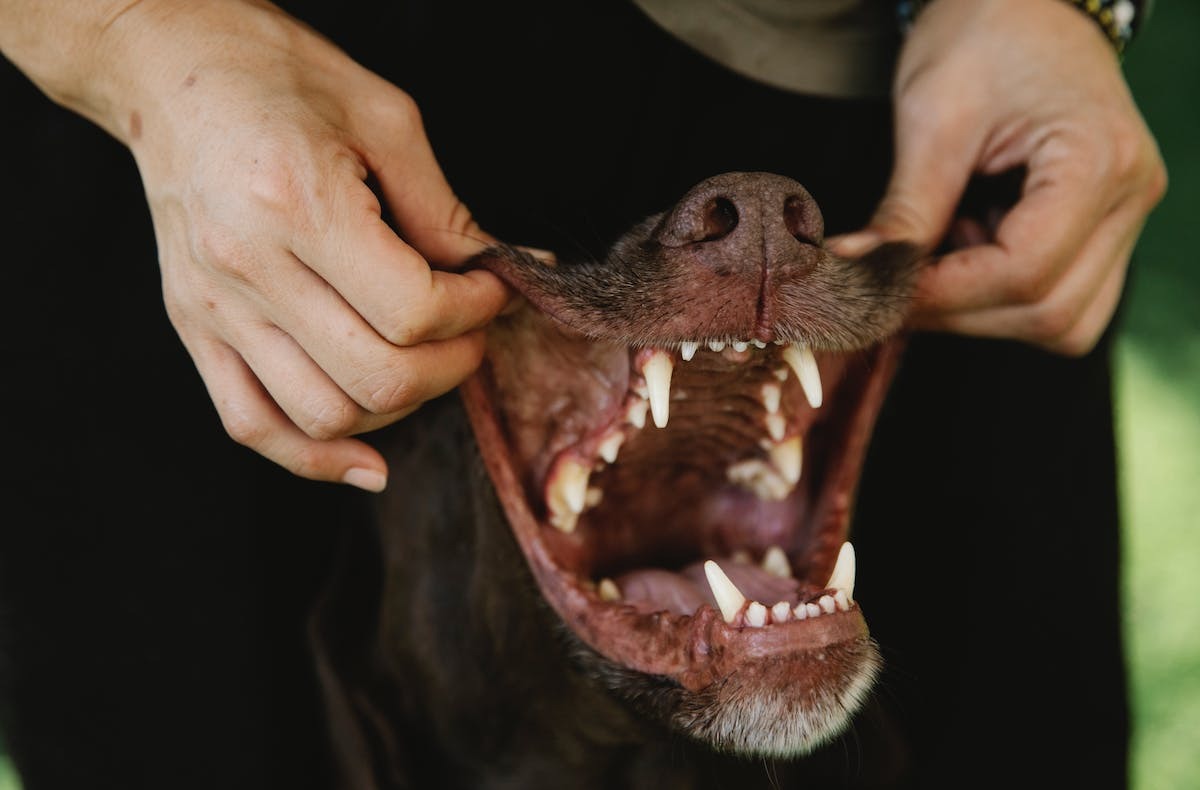
This power would be nothing without the formidable tool that is the canine teeth. Extremely robust by nature, they are designed to penetrate deeply into any object a dog decides to seize. The molars have also evolved specifically to grind efficiently.
However, it is important to note that each breed has its own unique anatomical configuration that directly impacts the ‘dog jaw power’. Some breeds thus have an intrinsically stronger jaw either due to particularly developed musculature or sometimes simply due to specific genetic traits.
Obviously, being aware that an increased ‘dog jaw power’ does not necessarily equate to danger is crucial: it should be remembered how appropriate training combined with adequate socialization can help channel this raw strength while potentially minimizing any behavioral risks associated.
Understanding how the ‘dog jaw power’ precisely works helps us not only to better comprehend these extraordinary animals but also greatly fosters the healthy development of the human-animal bond ensuring mutual safety.
The Anatomy of the Canine Jaw: An Impressive Structure
The power of a dog’s jaw is a fascinating subject that deserves in-depth exploration. Several reasons explain this impressive strength possessed by our canine companions.
It should be emphasized that dogs are carnivores by nature. Their digestive system and anatomy have evolved to allow them to primarily feed on meat. Consequently, they have developed powerful jaws capable of tearing and grinding flesh as well as bones.
One of the key characteristics contributing to the strength of a dog’s jaw is the temporomandibular joint (TMJ). This complex joint connects the skull to the mandible and provides it with great mobility. The surrounding muscles, such as the temporalis, masseter, and pterygoid muscles, play an essential role in this dynamic by providing significant force when they contract.
The dog’s teeth are specially adapted to their dietary needs. The sharp canines are designed to firmly grasp their prey while the robust molars allow for effective crushing and grinding of food.
It should be noted that some breeds exhibit a unique anatomical configuration directly influencing the power of their jaw. Some dogs may have particularly developed musculature, which enhances their biting strength. Other breeds may possess specific genetic traits that contribute to their power.
It is important to understand that the power of a dog’s jaw does not necessarily translate into increased danger. Education and socialization play a crucial role in the healthy development of canine behavior. Proper training allows the dog to learn to channel its strength while minimizing potential risks.
The power of a dog’s jaw results from a complex combination of its anatomy, muscles, and teeth adapted to its dietary needs. Understanding these mechanisms allows us not only to appreciate our canine friends more but also to promote a harmonious human-animal relationship based on mutual trust.
The Reasons for the Power of the Dog’s Jaw: A Combination of Factors
When a dog bites, the consequences can be serious and varied. The strength of its jaw can cause deeply penetrating injuries and significant damage to surrounding tissues and muscles. The risks of infection are also high due to the bacteria present in the dog’s mouth.
Injuries caused by a dog bite may require immediate medical care, including stitches to close wounds or even surgery if the tissues are severely damaged. In some cases, functional rehabilitation may be necessary to restore mobility and functionality affected by the bite.
Beyond physical injuries, the psychological consequences of a dog bite should not be underestimated. Victims may develop a strong sense of fear and anxiety towards dogs, which can significantly impact their quality of life. Appropriate psychological support is essential to help these individuals overcome their trauma.
It should also be noted that the dog’s owner is generally responsible for the actions of their animal. In the event of an accident or incident causing injuries, they may be held financially liable for medical expenses as well as any compensation related to the damage suffered.
To avoid these unpleasant situations, it is important to take responsibility for the education and socialization of your dog. Adequate training, focusing on balanced dog behavior, can help prevent bites.
It is crucial to learn to interpret the non-verbal signals that dogs use to communicate their discomfort or potential aggression. A better understanding of facial expressions, body language, and canine vocalizations will enable owners to react more quickly and effectively when a potentially dangerous situation arises.
Dog Bite: Often Serious Consequences
In the canine world, certain breeds stand out for the power of their jaws. These dogs possess impressive strength that can be used for various purposes, whether working alongside humans or engaging in specific sports activities.
One of the most well-known breeds for its powerful jaw is the Great Dane. With its imposing size and massive skull, it has a very high biting capacity. Despite this strength, Great Danes are generally gentle and friendly towards humans.
The Rottweiler is also known for having a powerful jaw. Originating from Germany, this breed was initially developed as a butcher and herd guard dog. Even today, they are valued for their abilities as police and military dogs due to their physical strength.
Other breeds with powerful jaws include the Belgian Malinois and the Japanese Akita Inu. The Malinois is a working dog that excels in various fields such as search and rescue or obedience due to its unwavering determination and exceptional athletic abilities.
As for the Japanese Akita Inu, it is a robust dog originating from Japan with an ancient history associated with samurai. Its strong constitution gives it great jaw strength as well as unwavering loyalty to its masters.
It should be noted that the power of a dog’s jaw should not be confused with its aggressiveness. Strength is merely a physical characteristic, and a dog’s behavior depends on many other factors such as its training, socialization, and the interactions it has had throughout its life.
Understanding the power of a dog’s jaw is essential for ensuring a harmonious interaction between humans and animals. It is crucial for owners of these ‘stronger’ or potentially muscular breeds, whether large or not, to pay particular attention to their training to avoid any unfortunate incidents. A responsible approach lies in an effective combination of unconditional love for our canine companions and firm yet respectful discipline of the specific needs of each breed.
Dog Breeds with Formidable Jaws: The Most Powerful Revealed
In order to manage the power of a dog’s jaw, you must provide your dog with sufficient daily physical exercise to expend its accumulated energy. Activities such as running, swimming, or playing fetch are particularly beneficial for maintaining a good physical and mental balance in your canine companion.
Proper use of durable toys specifically designed for dogs can help satisfy their natural chewing instinct while protecting your belongings. However, always ensure to choose toys that are suitable for the size and individual needs of the dog to avoid any potential risks.
Constant supervision during interactions with other animals or encounters with strangers is also essential to prevent any undesirable behavior. By carefully observing your dog’s body signals, you will be able to quickly identify any tension or potential aggression and intervene appropriately.
Never underestimate the importance of consulting a qualified canine professional if you have specific concerns about your dog’s powerful jaw. An experienced dog trainer will be able to provide you with personalized advice tailored to your particular situation.
Understanding and managing the power of a dog’s jaw requires a responsible and well-thought-out approach. With proper education, early socialization, plenty of physical exercise, and attentive supervision, it is possible to establish a harmonious relationship with our canine companions with powerful jaws.
Managing the Power of a Dog’s Jaw: Keys to Prevention and Training
Beyond the management of a dog’s jaw power, it is important to ensure that it is balanced and appropriate to their nutritional needs.
By choosing high-quality protein-rich foods, along with essential vitamins and minerals, you contribute to the healthy development of muscles and bones while strengthening the immune system. Do not hesitate to consult a veterinarian or canine nutritionist for specific recommendations tailored to your companion’s individual needs.
Education plays a crucial role in the control of behavior related to biting strength. Learning from a young age will allow your dog to acquire the necessary social foundations to interact with other members of its community.
The positive use of positive reinforcement during training sessions not only promotes learning but also strengthens the bond between you and your animal. By rewarding good behaviors rather than punishing bad ones, you encourage your dog to behave correctly without resorting to its powerful jaw.
Particular attention should be paid to stressful situations that may trigger aggressive or anxious behavior in some dogs. Early socialization with different environments, sounds, people, and animals can help your companion develop increased tolerance and confidence, thereby reducing the risk of undesirable behaviors.
Remember that a well-balanced dog is, above all, a happy dog. Give it enough attention, love, and mental stimulation to avoid boredom that can lead to destructive or aggressive behaviors.
The power of a dog’s jaw is an important aspect to consider when sharing life with these wonderful creatures. By adopting a responsible approach based on education, socialization, and care for their physical and mental environment, we can create a harmonious relationship with our canine friends with powerful jaws.